
Hear from Our Customers
You know when a door knob feels cheap. It wobbles when you turn it, or the latch doesn’t catch unless you lift the handle just right. That’s what happens when hardware gets installed wrong or when someone went with the lowest bid and got exactly what they paid for.
When your door knob installation is done properly, you don’t think about it. The door closes without forcing it. The lock turns without grinding. Your kids can operate it without calling for help.
That’s what matters in a home where more than half the houses were built between the 1940s and 1960s. Older doors don’t always play nice with modern hardware unless you know how to prep the bore, align the strike plate, and account for settling that’s happened over decades. Get it wrong and you’re dealing with gaps, misalignment, and hardware that fails in under a year.
We’ve been around since the late 1800s. That’s four generations of locksmiths who’ve seen every type of door, every botched DIY job, and every lock mechanism that’s come through Delaware County.
We’re not a van with a phone number. We’ve got a storefront in Prospect Park, just a few minutes from Clifton Heights on Baltimore Pike. You can walk in, see the hardware we stock, and talk to someone who’s actually going to show up at your house.
Tom McCausland runs the largest locksmith operation in the Delaware Valley. His daughter Chrissy works alongside him. When you call, you’re getting people who’ve been doing this their whole lives, not a call center that farms your job out to whoever answers their phone first.
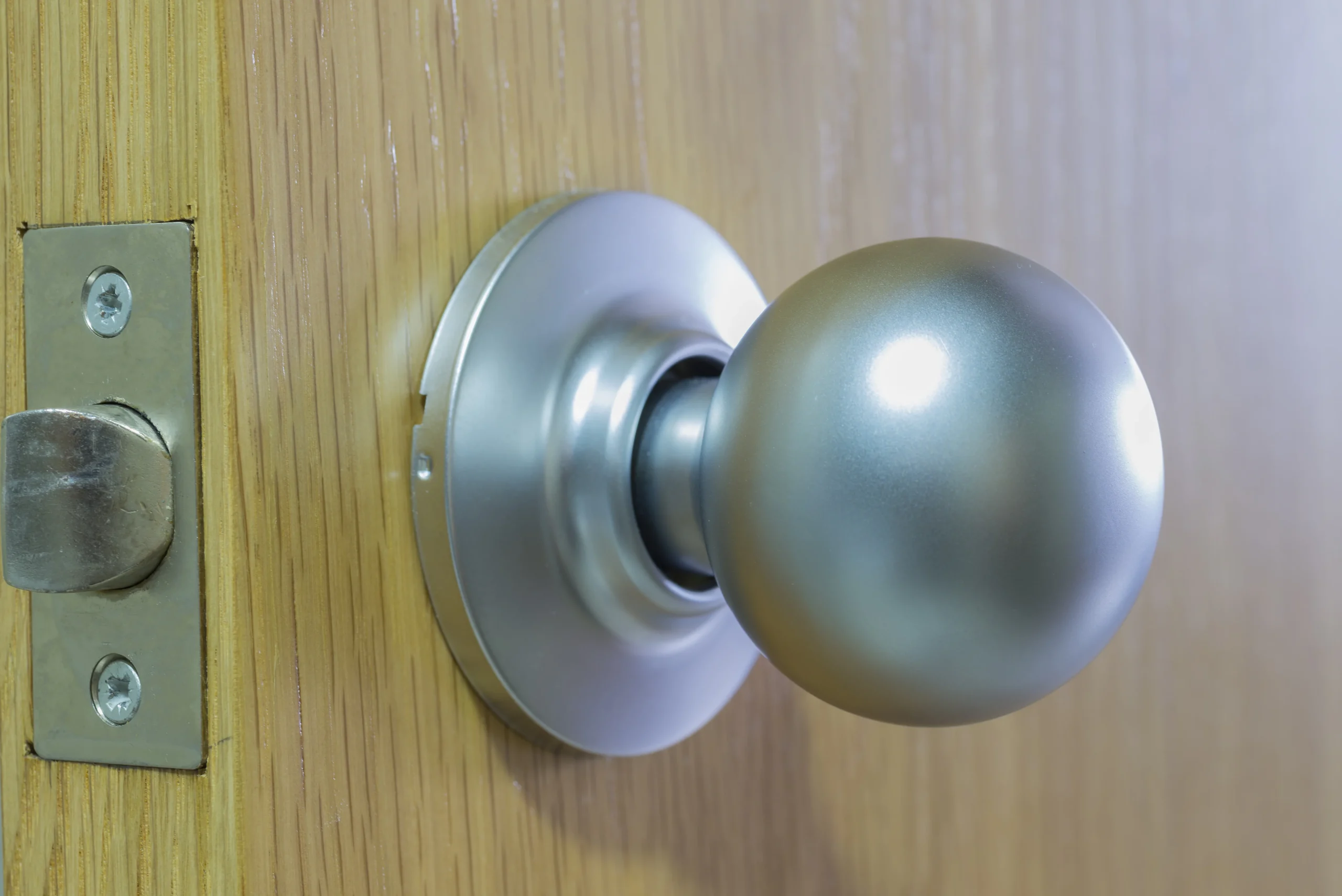
First, we look at what you’ve got. If you’re replacing old knobs, we check the bore size, backset, and door thickness. Not all doors are drilled the same, and forcing modern hardware into an old setup is how you end up with loose knobs and misaligned latches.
If the existing holes don’t match the new hardware, we’ll tell you before we start. Sometimes that means using an adapter plate. Sometimes it means drilling a new bore. Either way, you’ll know what’s involved and why.
Once the door’s prepped, we install the knob or lever, set the strike plate so it actually catches, and test it a few times to make sure everything operates smoothly. If you’re getting multiple doors done, we can key them alike so you’re not juggling different keys for every room in your house.
We clean up, show you how the new hardware works, and make sure you’re set before we leave. If something doesn’t feel right, we fix it then, not after you’ve called us back three times.
Ready to get started?
You’re getting hardware that fits your door correctly. That means we’re measuring backset, checking door thickness, and making sure the latch aligns with the strike plate. If your door’s from the ’50s and you’re installing a modern Kwikset or Schlage lever, we’re accounting for the differences so it doesn’t bind or rattle.
In Clifton Heights, where nearly 60% of homes are row houses or attached units, you’re also getting hardware that meets your actual security needs. A bedroom door doesn’t need the same lockset as your front entry. We’ll walk you through what makes sense for each door without upselling you on features you don’t need.
We stock OEM parts from Kwikset, Schlage, and Medeco. If something breaks down the line, you can get it serviced or replaced without ripping out the whole assembly. And if you want everything keyed the same, we handle that during installation so you’re not carrying around a keyring that weighs more than your phone.
You’re also getting this done by people who are licensed, insured, and BBB accredited. Our PA license number is 013604. We’ve been serving Delaware County long enough that we’re not disappearing after the job’s done.
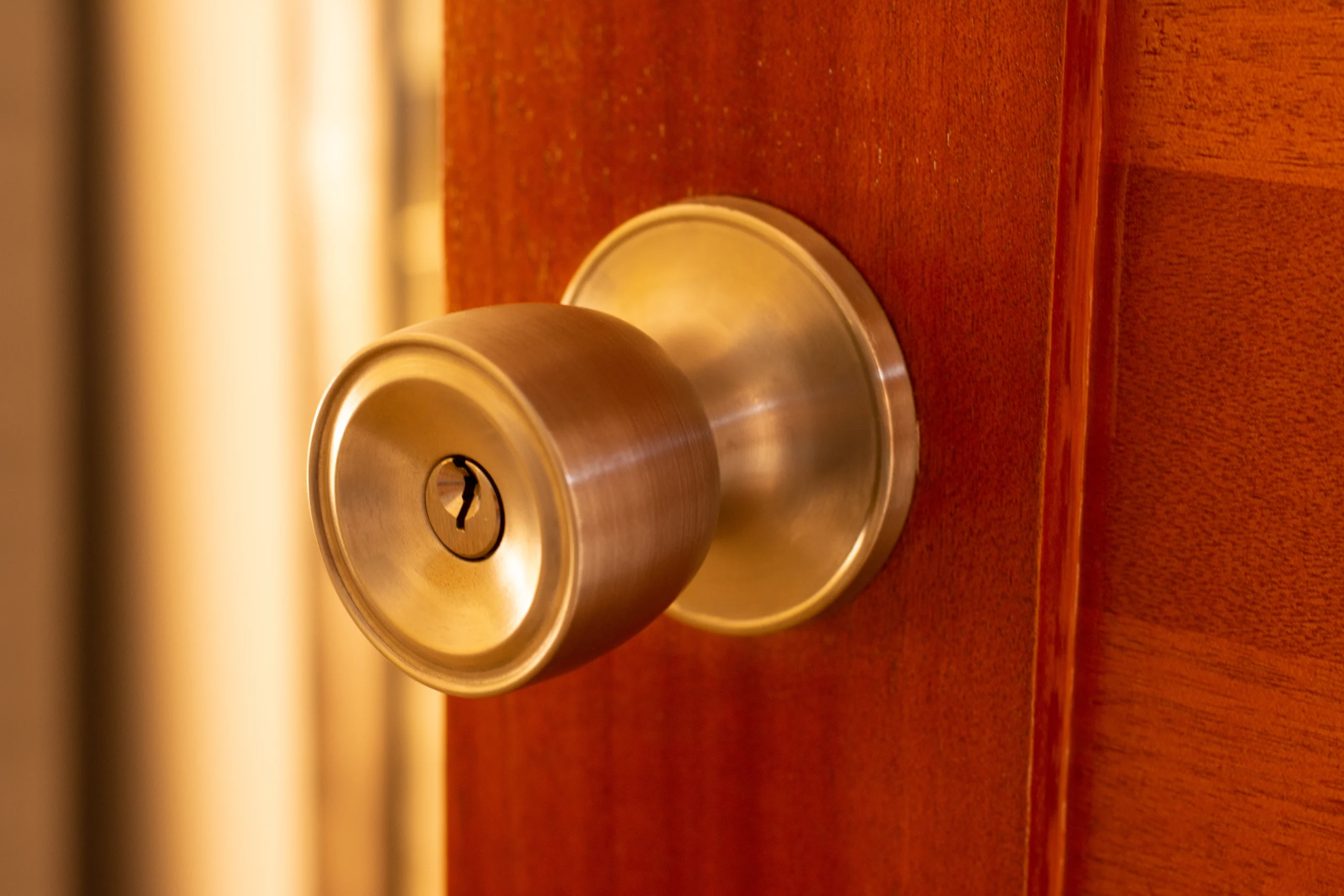
Most door knob installations run between $150 and $357 per door, depending on the hardware you choose and what’s involved in the install. If you’re swapping a standard knob for another standard knob and the bore size matches, you’re on the lower end. If we’re installing a new lever on a door that’s never had one, or if the existing holes don’t line up with modern hardware, it takes more time and sometimes additional materials.
The hardware itself is a big part of the cost. A basic Kwikset knob costs less than a Schlage commercial-grade lever or a Medeco high-security lockset. We’ll show you options that fit your budget and your actual security needs.
If you’re doing multiple doors, the per-door cost usually comes down. We’re already on-site, and if you want them all keyed alike, we handle that during the same visit instead of charging you for a separate rekey trip later.
Yes. More than half the homes in Clifton Heights were built between the 1940s and 1960s, and we’ve worked on plenty of them. Older doors come with their own challenges – odd bore sizes, non-standard backsets, settling that’s thrown the frame out of alignment.
Modern door knobs and levers are built to current standards, which don’t always match what was drilled 60 or 70 years ago. Sometimes we use adapter plates to make new hardware fit old holes without drilling new ones. Other times, we need to enlarge the bore or adjust the strike plate so the latch actually catches when you close the door.
The goal is to get your new hardware installed without damaging the door or making you replace the whole thing. We’ve done this enough times that we know what works and what’s going to cause problems six months from now. If your door’s in rough shape and won’t support new hardware properly, we’ll tell you that upfront instead of taking your money and leaving you with a knob that falls off.
A door knob is round and you twist it to operate the latch. A door lever has a handle you push down. Levers are easier to use if you’ve got your hands full, if you’re dealing with arthritis, or if you’ve got kids who struggle with the grip strength needed to turn a knob.
Levers are also required by ADA standards for accessibility, which is why you see them in commercial buildings and newer construction. In your home, it’s mostly about preference and ease of use.
The installation process is similar, but levers put different stress on the door because of the leverage involved. If you’re installing a lever on a hollow-core interior door, you need to make sure the door can handle it, or you’ll end up with a loose, sagging handle. On solid wood or metal doors, it’s less of an issue. We’ll let you know if your door’s a good candidate for a lever or if you’re better off sticking with a knob.
A straightforward replacement on a door that’s already prepped usually takes 20 to 30 minutes per door. If we’re installing hardware on a door that’s never had it, or if we need to drill new holes or adjust the frame, it can take an hour or more.
The time adds up if you’re doing multiple doors, but it also gets more efficient. Once we’ve got our tools out and we’re moving from room to room, the per-door time drops. If you’re rekeying everything to match, that happens during the same visit, so you’re not waiting around for a second appointment.
We’ll give you a realistic time estimate when we look at the job. If something takes longer than expected because we run into an issue – stripped screws, a cracked door frame, misalignment we didn’t see until we pulled the old hardware – we’ll explain what’s happening and what it takes to fix it right.
It depends on what’s wrong. If the knob is loose, sometimes it just needs tightening or a new set screw. If the latch isn’t catching, the strike plate might need adjusting. Those are repairs, and they’re cheaper than replacement.
But if the internal mechanism is worn out, if the knob spins without engaging the latch, or if the metal’s corroded to the point where parts are breaking off, replacement makes more sense. Trying to repair hardware that’s at the end of its life usually means you’re calling us back in a few months when it fails again.
We’ll look at what you’ve got and tell you honestly whether a repair will hold or if you’re better off replacing it. If the hardware’s 40 years old and it’s a brand that doesn’t exist anymore, finding parts is harder than just installing a new Kwikset or Schlage lockset that you can get serviced anywhere.
Yes. If you’re installing new knobs or levers, we can key them all alike during the installation so you only need one key for every lock in your house. If you’ve already got hardware installed and you just want it rekeyed to match, we can do that too.
Rekeying means we’re changing the pins inside the lock cylinder so it works with a different key. It’s faster and cheaper than replacing all the hardware, and it gives you the same result – one key for everything.
This is especially useful if you just bought a house and you don’t know who has keys from the previous owner, or if you’ve had contractors, neighbors, or family members with copies you’d rather not have floating around. Rekeying gives you control over who has access without the cost of replacing every lock. We handle residential locksmith services like this all the time in Clifton Heights, and it’s one of the most common requests we get from new homeowners.