Smart locks have come a long way. Here's what Delaware County homeowners actually need to know before choosing one — or calling us to install it.
You’ve probably had the thought mid-commute — did I actually lock the front door? Or maybe you’re tired of cutting spare keys for the dog walker, the house cleaner, and your in-laws. Smart locks solve both problems, but only when the right one is installed correctly on the right door.
There’s a lot of noise in this space — every big-box store has a display, every app promises simplicity, and half the YouTube tutorials skip the part where your 1950s colonial in Havertown doesn’t have standard door prep. This guide cuts through that. We’ll walk you through what smart locks actually are, how the different types compare, and what to know before you commit.
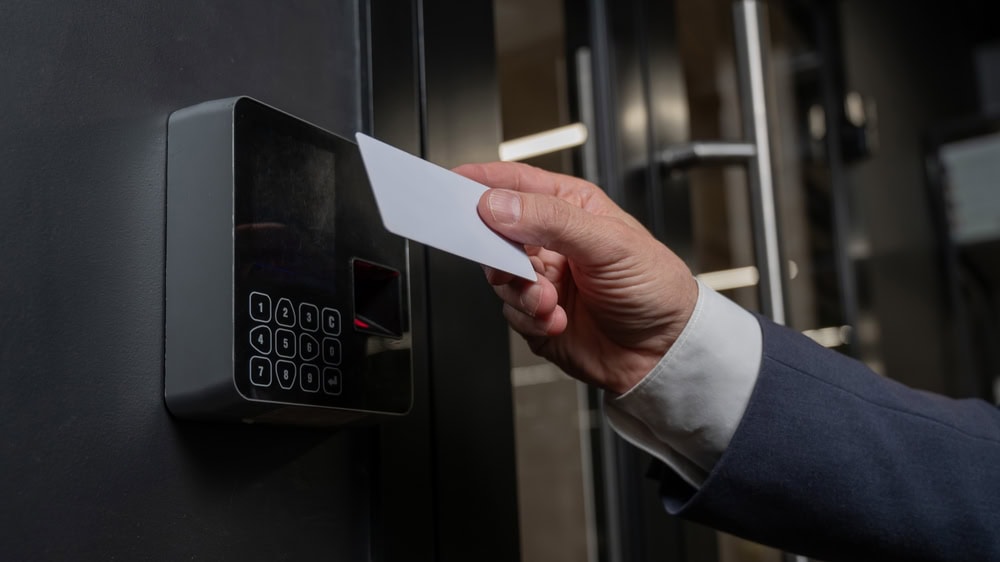
A keyless entry door lock is exactly what it sounds like — a lock that lets you in without a physical key. But beyond that simple definition, the category splits into several distinct technologies, and each one works differently, fits differently, and suits different households.
Keypad locks use a PIN code. Bluetooth locks communicate with your phone. WiFi locks connect to your home network and let you control access remotely. Biometric locks read a fingerprint. Some locks combine two or three of these methods. The right choice depends on your door, your household, and what you’re actually trying to solve.
For Delaware County homeowners, the most common mistake is picking the technology first and the door fit second. That backwards approach is why so many DIY installations end up loose, unreliable, or worse — incompatible with the actual hardware your home has.
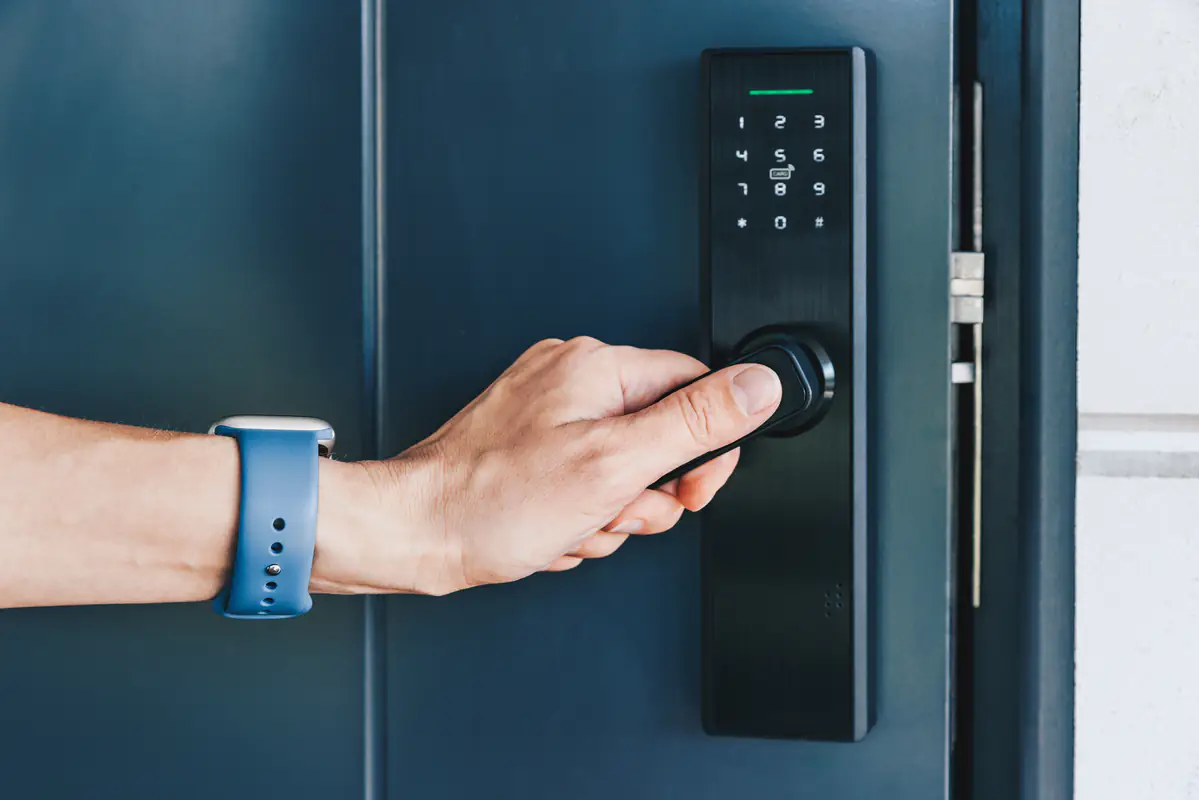
This is one of the first questions worth answering before you buy anything. Most residential smart locks are designed as deadbolts — they replace the deadbolt you already have and leave your existing door handle in place. A keyless entry door lock with handle, on the other hand, replaces the entire lockset: handle and lock together in one unit. These are common in commercial settings and increasingly popular for rental properties where landlords want a clean, all-in-one solution.
For most Delaware County homeowners, a smart deadbolt is the simpler path. It installs over your existing door prep, works with your current handle, and doesn’t require modifying the door itself. The catch is that “existing door prep” varies significantly depending on when your home was built. A 1930s row home in Lansdowne or Sharon Hill may have a non-standard backset — the distance from the edge of the door to the center of the lock hole — that doesn’t match modern hardware dimensions. This is one of the most common reasons DIY smart lock installations fail or end up feeling loose and unreliable.
A keyless entry door lock with handle tends to require more door modification upfront, but it also gives you a single point of control and a cleaner finished look. For landlords managing properties in Drexel Hill or Collingdale, or anyone running a short-term rental, the ability to change access codes between guests without cutting a single key is worth the extra installation work.
The honest answer is that neither option is universally better. What matters is matching the hardware to the door and the use case. That’s an assessment worth doing before you order anything online.
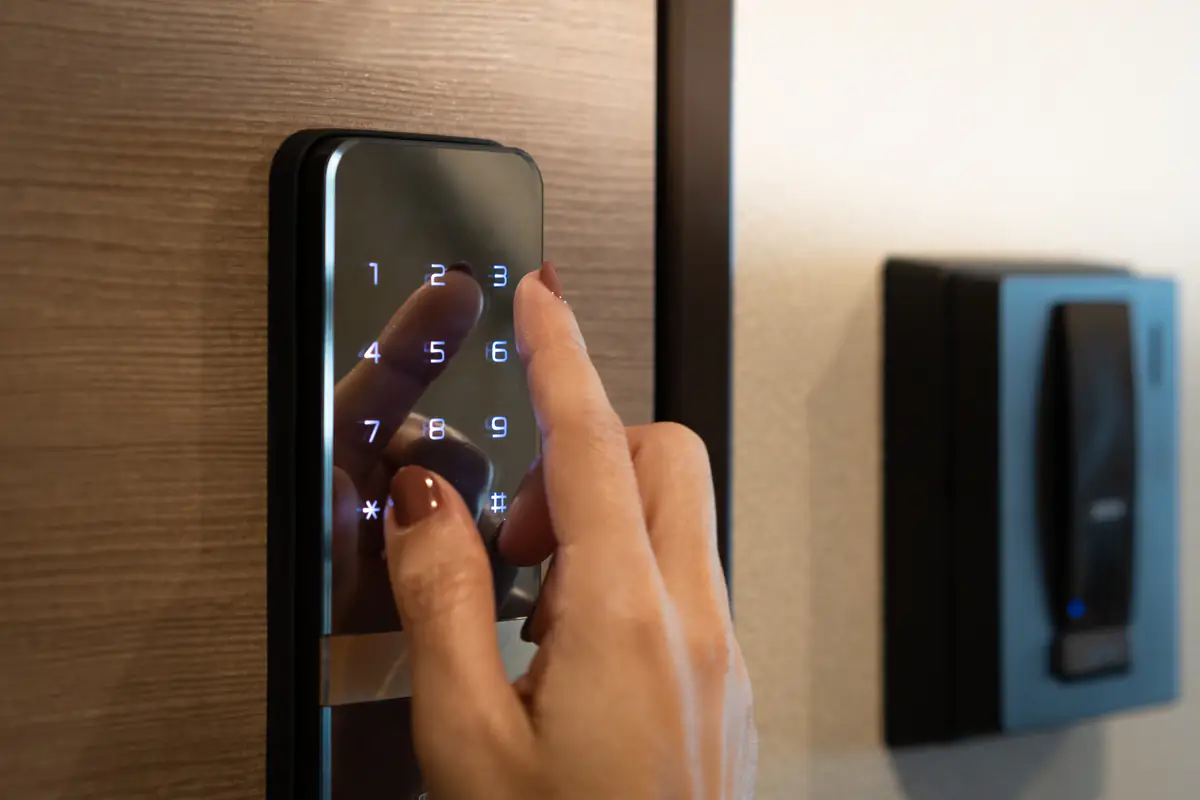

Keypad authentication is the most widely adopted entry method, and for good reason. A keypad door lock doesn’t require a phone, doesn’t depend on Bluetooth range, and works even when your WiFi is down. For households with kids, elderly family members, or anyone who routinely forgets their phone, a keypad is often the most practical choice.
The best keypad door lock setups allow you to program multiple codes — one for each family member, one for recurring visitors, one temporary code for a contractor that expires after a set number of uses. When someone moves out or a contractor finishes the job, you delete the code. No rekeying, no tracking down spare keys, no wondering who still has access.
What separates a good keypad lock from a mediocre one comes down to a few things: weather resistance (Pennsylvania winters are not gentle on outdoor hardware), backlit keys for nighttime use, auto-lock functionality, and a physical key backup for emergencies. A low-battery warning is non-negotiable — you don’t want to discover the batteries are dead at 11pm after a long day.
One thing worth knowing: keypad locks, like all smart locks, should never be left with the factory default code still active. It sounds obvious, but it’s one of the most common installation oversights when people set these up themselves. We handle that configuration as part of the job — it’s not an afterthought.
Want live answers?
Connect with a McCausland Lock Service expert for fast, friendly support.
The difference between a WiFi door lock and a Bluetooth door lock matters more than most buyers realize. Bluetooth locks communicate directly with your phone when you’re nearby — typically within 30 feet. They’re fast, they work without internet, and they’re generally more energy-efficient. WiFi locks connect to your home network, which means you can lock and unlock your door from anywhere in the world.
If the mid-commute “did I lock the door?” panic is your primary motivation, a WiFi lock solves it in a way a Bluetooth lock cannot. But WiFi locks draw more power and depend on your home network staying up. For most Delaware County households, the right answer depends on how often you need remote access versus how much you want to simplify the setup.
This is one of the most common concerns we hear, and it’s a fair one. The short answer is: most quality smart locks continue to work locally even when your internet is down. A WiFi lock that loses its network connection won’t let you control it remotely from your phone, but you can still enter using your keypad code, your fingerprint, or a physical key backup. The lock doesn’t become a dead piece of hardware just because your router is rebooting.
Bluetooth locks are even less dependent on your home network — they communicate directly with your phone, so internet outages don’t affect them at all. Z-Wave and Zigbee locks operate on their own mesh networks, separate from your WiFi entirely, which makes them especially reliable for smart home setups where network stability is a concern.
The bigger risk people overlook isn’t the WiFi going down — it’s the battery dying. Smart locks run on batteries, and in Pennsylvania’s climate, cold temperatures can drain them faster than the manufacturer’s estimates suggest. A lock installed on a north-facing door in Springfield or Ridley Park in January is going to see different battery performance than one installed in a climate-controlled entryway. Quality locks send low-battery alerts to your phone well in advance, and most have a physical key override or an external power option as a last resort. We’ll walk you through all of this during setup, not leave you to discover it on your own at the worst possible moment.
Yes, smart locks can be compromised — but the risk is almost always tied to how they’re configured, not the technology itself. The locks worth buying use AES-256 encryption — the same standard used by financial institutions and the U.S. government — for all wireless communication. That level of encryption isn’t the vulnerability. What creates risk is leaving default passwords in place, skipping firmware updates, using weak PIN codes, or connecting a lock to a poorly secured home network. These are the gaps that a rushed DIY installation tends to leave open.
Our professional installation addresses all of this upfront. That means changing default credentials, enabling two-factor authentication where the lock supports it, confirming the firmware is current, and making sure the physical installation itself — the strike plate, the door alignment, the backset — doesn’t create a mechanical weak point that undermines the digital security. A smart lock installed with a misaligned strike plate can be forced open regardless of how strong the encryption is.
For Delaware County homeowners in communities closer to the Philadelphia border — Upper Darby, Darby, Lansdowne — where property crime patterns from the city have historically extended into the suburbs, this isn’t a theoretical concern. The right lock, installed correctly, is a meaningful deterrent.
Smart locks are genuinely useful technology — but only when the right one ends up on the right door, set up correctly from the start. The product choice, the door assessment, the configuration, the integration with whatever smart home system you already have — none of that happens automatically just because you ordered something off Amazon.
Delaware County’s housing stock is varied. A newer build in Newtown Square and a mid-century colonial in Havertown aren’t the same installation. Neither is a single-family home in Swarthmore and a multi-unit rental property in Folcroft. Experience with the specific doors, frames, and hardware common to this area matters — and it’s not something you get from a national app-based dispatch service.
McCausland Lock Service has been working on Delaware County doors since the late 1800s — five generations of the same family, with a shop you can actually walk into at 1101 Lincoln Ave in Prospect Park. If you’re ready to talk through what makes sense for your door and your situation, call us at 610-903-9001.
Summary:
Article details:
Share: