Not all doorbell cameras are created equal — and not every home is ready for one out of the box. Here's what Delaware County homeowners actually need to know.
A package disappears off your porch. A stranger knocks and you hesitate before answering. You’re on the SEPTA train into Philadelphia wondering what’s happening at your front door. These aren’t hypothetical worries — they’re everyday realities for homeowners across Delaware County. A door camera addresses all of them, but picking the right one and getting it installed correctly are two very different challenges. This guide walks you through what the technology actually does, what to look for when comparing options, and why professional installation changes the outcome more than most people expect.
A door camera is any device mounted at or near your front door that captures video of who’s there — before you open it. The most common type today is the video doorbell, which replaces or supplements your existing doorbell button and connects to your smartphone so you can see, hear, and speak to whoever’s at the door from anywhere.
Beyond video doorbells, there are peephole cameras that replace the traditional door viewer with a digital screen, and smart door viewers that mount on the inside of your door and display a live feed without requiring any exterior wiring. Each type has its place depending on your door setup, your rental situation, and how much you want to modify the exterior of your home.
What they all share is the core function: visual verification before you unlock anything. That’s not a small thing. The front door is the most common entry point for burglars, and a camera that captures a clear image of who’s standing there — and sends it to your phone in real time — gives you information and time that you simply don’t have otherwise.

The word “wireless” gets used loosely in doorbell camera marketing, and it causes real confusion. When a manufacturer calls a doorbell camera wireless, they almost always mean it runs on a rechargeable battery rather than hardwired power. It still needs a Wi-Fi connection to function. It still needs to be physically mounted to your wall, door frame, or siding. “Wireless” describes the power source — not the setup process.
For many homeowners, a battery-powered doorbell camera is genuinely easier to install because it doesn’t require touching your existing doorbell wiring. You mount the bracket, attach the camera, connect it to your home network through an app, and you’re done. No electrician, no transformer questions. That simplicity is real, and for the right home, it works well.
The catch is battery maintenance. Under normal conditions, most wireless doorbell cameras last somewhere between two and six months on a single charge. But here’s what the product listings don’t emphasize: cold weather cuts that significantly. Delaware County winters regularly push below freezing in January and February, and lithium-ion batteries lose meaningful capacity in those temperatures. A camera that lasts five months in spring might need a recharge by mid-January if installed in the fall. That’s not a dealbreaker, but it’s something to plan for — and something most people don’t find out until it happens.
Wi-Fi range is the other variable that catches homeowners off guard. If your router sits in a back bedroom or basement, the signal reaching your front door may be weaker than you’d expect — especially in older Delaware County homes with thick plaster walls, which absorb wireless signal far more than modern drywall does. A camera that shows full bars on your phone in the kitchen might struggle to maintain a stable connection at the front door. The fix is usually a Wi-Fi extender or a mesh network node placed near the entrance, which is a straightforward addition but one worth knowing about before you buy.
There’s no shortage of spec sheets and feature lists when you start comparing options. Most of them are accurate. Not all of them are equally important. Here’s what we’d tell a homeowner to actually focus on.
Resolution is where to start. A 1080p HD camera is the baseline worth considering — anything lower and you’re likely to end up with footage that’s too blurry to identify a face or read a license plate. A 2K camera (2048×2048 pixels) gives you noticeably sharper detail and is worth the modest price difference if you’re buying a wired model you expect to keep for several years. The goal is footage you can actually use, not just footage that exists.
Field of view determines how much of your property the camera captures. Most doorbell cameras offer somewhere between 120 and 180 degrees of horizontal coverage. A wider field of view is generally better for front porches — it picks up someone approaching from the side, a package left to the left of the door, or a vehicle parked at the curb. For the narrow porches common in Lansdowne row homes or Collingdale twins, a wider angle also compensates for the limited mounting positions available.
Night vision quality varies more than the spec sheets suggest. Look for cameras that use infrared LEDs combined with color night vision if possible — infrared alone produces that familiar grainy black-and-white image that’s often not detailed enough to be useful. Color night vision, which uses ambient light from streetlamps or porch lights, produces a far more identifiable image.
On the subscription question: most major brands — Ring, Google Nest, Arlo — require a monthly fee ranging from roughly five to fifteen dollars to access recorded video history, person detection alerts, and package notifications. Without a subscription, many of these cameras only provide live viewing and basic motion alerts. If you’d rather avoid an ongoing cost, brands like Eufy and Reolink offer local storage options where footage is saved to a microSD card or a home hub, with no monthly fee. It’s a real alternative, not a compromise — just a different model.
Want live answers?
Connect with a McCausland Lock Service expert for fast, friendly support.
A door camera shows you who’s there. A lock controls whether they get in. These two things work better together than either does alone, and the integration between them is something most doorbell camera guides don’t address — because most doorbell camera guides aren’t written by locksmiths.
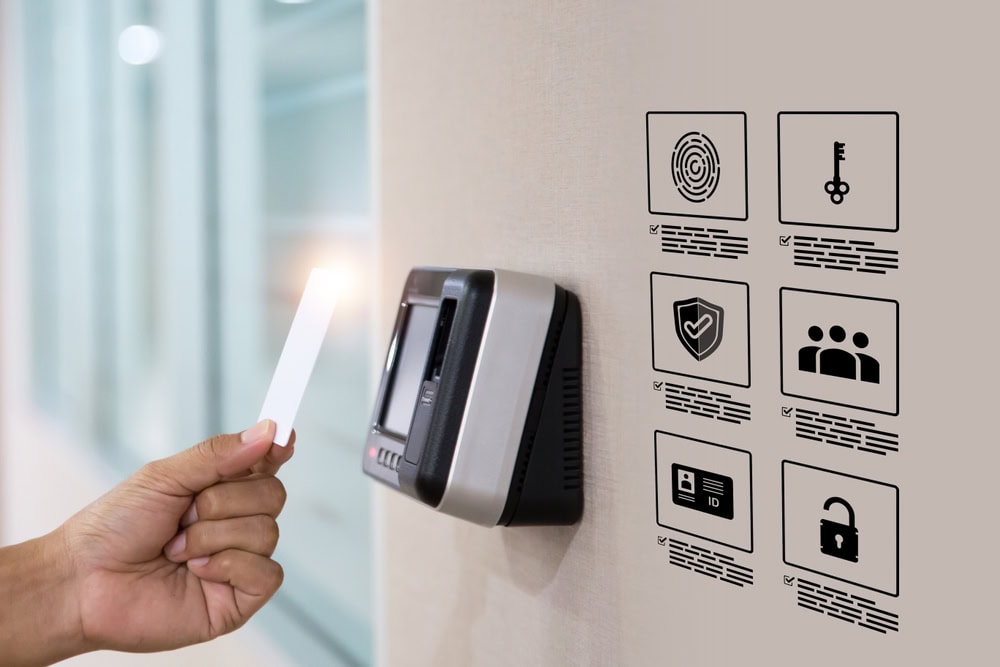
When a video doorbell is paired with a smart lock, you get a complete entry system: you see someone on camera, verify it’s your dog walker or a delivery you’re expecting, and unlock the door remotely from your phone without having to issue a physical key. That workflow is practical, not futuristic, and it’s something we set up regularly for homeowners across Delaware County.
Wired video doorbells — the kind that draw continuous power from your home’s existing doorbell wiring — are generally more reliable than battery models. No recharging, no battery drain in January, no interruption in coverage. For most homeowners who plan to keep a camera long-term, wired is the smarter choice.
The installation challenge in Delaware County is that a significant portion of the housing stock predates modern doorbell wiring standards. Homes built in the 1930s, 1940s, and 1950s — which make up a large share of neighborhoods like Havertown, Lansdowne, Upper Darby, and Yeadon — often have doorbell transformers that output 8 or 10 volts AC. Most modern video doorbells require 16 to 24 volts to operate correctly. Connect a new camera to an undersized transformer and you’ll get unreliable performance, failed connections, or a camera that simply won’t power on.
This is one of the most common reasons a DIY wired doorbell installation fails. The homeowner buys the camera, follows the instructions, wires it up, and nothing works — or it works intermittently. The transformer is the culprit, and it’s not something that’s obvious until you know to check for it. A transformer upgrade is a straightforward fix, but it requires knowing the issue exists in the first place.
Brick and stucco exteriors — also common throughout Delco’s older neighborhoods — add another layer of complexity for mounting. Standard plastic anchors don’t hold reliably in masonry. Proper mounting in brick requires masonry drill bits, appropriate anchors, and some care to avoid cracking the mortar. It’s not complicated work, but it’s a different process than mounting into wood siding, and skipping those details is how cameras end up loose or angled incorrectly six months later.
Most people buying a doorbell camera are thinking about security from the outside — keeping an eye on who approaches the door. It’s worth spending a moment on security from the inside: specifically, the security of the camera itself and the data it collects.
In 2024, Consumer Reports investigated a group of budget doorbell cameras sold under names like Andoe, Gemee, Luckwolf, and Fishbot on Amazon and Walmart. These cameras — all manufactured by a company called Eken — had a critical vulnerability that allowed remote hackers to access live video feeds and, in some cases, lock the legitimate owner out of their own device. The FCC proposed a fine of nearly $735,000 against the manufacturer. The cameras were inexpensive, widely available, and actively harmful to the people who bought them thinking they were adding security.
This isn’t an argument against buying a doorbell camera. It’s an argument for buying a reputable one. Brands like Google Nest, Arlo, Eufy, and Reolink have established track records, transparent privacy policies, and regular firmware updates that patch vulnerabilities when they’re discovered. The price difference between a tested, reputable camera and an off-brand one is usually modest. The difference in what you’re actually getting is not.
There’s also the question of data privacy and law enforcement access. Ring, which is owned by Amazon, has faced scrutiny for its policies around sharing footage with police. In 2025, Amazon reintroduced tools that allow law enforcement to request video from Ring users. This isn’t a hidden feature — Ring is transparent about it — but it’s worth knowing if privacy is a priority for you. If it is, local storage options from brands like Eufy or Reolink keep your footage on a device in your home rather than in a manufacturer’s cloud, and don’t involve third-party data sharing.
The broader point is that a doorbell camera is a connected device with a microphone, a camera, and access to your home network. Choosing a brand with a solid security reputation and keeping the firmware updated isn’t paranoia — it’s just good practice for any device in that category.
The right doorbell camera for your home depends on your wiring, your Wi-Fi setup, your existing locks, and what you actually want it to do. There’s no single answer that fits a 1940s Havertown colonial, a Lansdowne row home, and a newer construction in Newtown Square the same way — and any guide that pretends otherwise is skipping the part that matters most.
What we’ve seen over five generations of working on Delaware County doors is that the technology is only as good as the installation behind it. A well-chosen camera, properly mounted, correctly wired, and integrated with a reliable lock system, gives you something genuinely useful. A camera that was the wrong choice for your home, or installed without checking the transformer or the Wi-Fi signal, gives you frustration.
If you’re ready to stop researching and start getting something on your door that actually works, we’re at 1101 Lincoln Ave in Prospect Park — or reachable by phone at 610-903-9001. We’ve been doing this in Delaware County for a long time, and we’re happy to tell you exactly what your home needs before you spend a dollar on anything.
Summary:
Article details:
Share: