Not all home security systems protect you the same way. Here's what actually matters — and what most companies won't tell you upfront.
You’ve probably thought about home security more than once — maybe after hearing about a break-in nearby, maybe after a late night scrolling through reviews that all seem to say the same thing. The problem isn’t a lack of options. It’s that most of what you read is written to sell you something, not to help you make a smart decision.
This page is different. We’re going to walk you through how home security monitoring actually works, what separates a reliable system from a false sense of security, and what Delaware County homeowners specifically need to think about before making any decisions. Start here.
At its core, home security monitoring is a detection-and-response chain. Sensors placed at entry points — doors, windows, motion zones — communicate with a central hub. When something triggers a sensor, the hub either alerts you directly (self-monitoring) or contacts a professional monitoring center that can dispatch police, fire, or EMS on your behalf.
That distinction matters more than most buyers realize. Self-monitoring puts the burden on you to respond, 24 hours a day. Professional monitoring means trained staff are watching even when your phone is off or you’re in a meeting. The best systems use cellular backup so they keep working even if your Wi-Fi goes down or someone cuts the power — which is exactly what a determined burglar might try.
When you look past the brand names and the marketing, the best rated home security systems share a short list of qualities that actually determine whether they’ll protect you when it counts.
Reliable sensor communication is the foundation. Systems that rely entirely on Wi-Fi have a real vulnerability — lose your connection, lose your coverage. The strongest systems use encrypted wireless sensors with cellular backup, so there’s no single point of failure. RF jamming — where a burglar uses a cheap device to disrupt wireless signals — is a documented threat, and encrypted communication is the defense against it.
Response time is the second factor worth scrutinizing. Professional monitoring centers vary widely in how fast they actually respond. The industry average is 30 to 45 seconds after an alarm triggers. The best-performing systems average closer to 28 seconds. That gap matters when most burglaries are over in under 10 minutes.
Professional installation is the third element that separates a genuinely effective system from one that just looks good on paper. A motion sensor pointed toward a sun-facing window will false-alarm constantly. A door sensor installed on a frame that doesn’t close flush won’t register properly. These aren’t hypothetical problems — they’re the kind of errors that happen when buyers go DIY without understanding the nuances of sensor placement and coverage zones. A trained technician who walks your home, understands your entry points, and places equipment with intention will produce a system that actually works.
Finally, the best systems address environmental threats alongside intrusion. Smoke detectors, carbon monoxide sensors, and flood alerts are part of a complete picture. A fire injury occurs nationally every 53 minutes. Hardwired smoke alarms with battery backup reduce fire-related deaths by 71 percent. If your security system only watches for burglars, it’s leaving out a significant portion of what can go wrong in a home.
Here’s something most monitoring companies won’t tell you: roughly 37.5 percent of burglaries in 2023 involved no forced entry at all. Burglars walked through unlocked doors, slid open unsecured windows, or found a weak point that didn’t require breaking anything. A $50-per-month monitoring subscription doesn’t fix a cheap deadbolt or a door frame that gives way with one kick.
This is where most home security conversations go wrong. The industry has shifted toward apps, cameras, and smart devices — and those tools genuinely help. But they’re the second layer of protection, not the first. The first layer is physical: your locks, your door hardware, your deadbolts, and whether they’re properly installed and maintained.
Smart locks add another dimension worth understanding. When a smart lock is integrated with a monitoring system, you get a complete picture — who entered, when, and whether any alarm was triggered in connection with that entry. But that integration only works correctly when someone who understands both the lock hardware and the monitoring software sets it up. We know locks. Most monitoring companies don’t. Finding someone who knows both is genuinely uncommon, and it’s the kind of expertise that produces a system without gaps.
The combination of a properly secured physical entry point and a monitored electronic system is what actually deters burglars. Studies consistently show that 60 percent of convicted burglars would choose a different target if they spotted an alarm system. Add a reinforced door with a quality deadbolt, and you’ve made your home a significantly harder target than the one next door.
Want live answers?
Connect with a McCausland Lock Service expert for fast, friendly support.
Delaware County has its own security landscape, and it’s worth understanding before you make any decisions. Delco isn’t a monolith — Haverford Township ranked as the safest community in the county and one of the safest in Pennsylvania, while areas closer to the Philadelphia border face different pressures. A crime occurs somewhere in Delaware County every 40 minutes on average. Property crime — theft, burglary, vehicle break-ins — is the primary concern for most homeowners across the county.
The commuter reality matters here too. Many Delco residents drive into Philadelphia or Wilmington for work, leaving homes empty during the hours when most burglaries actually happen. FBI data shows more residential burglaries occur during the day than at night. A system that works while you’re away isn’t optional. It’s the whole point.
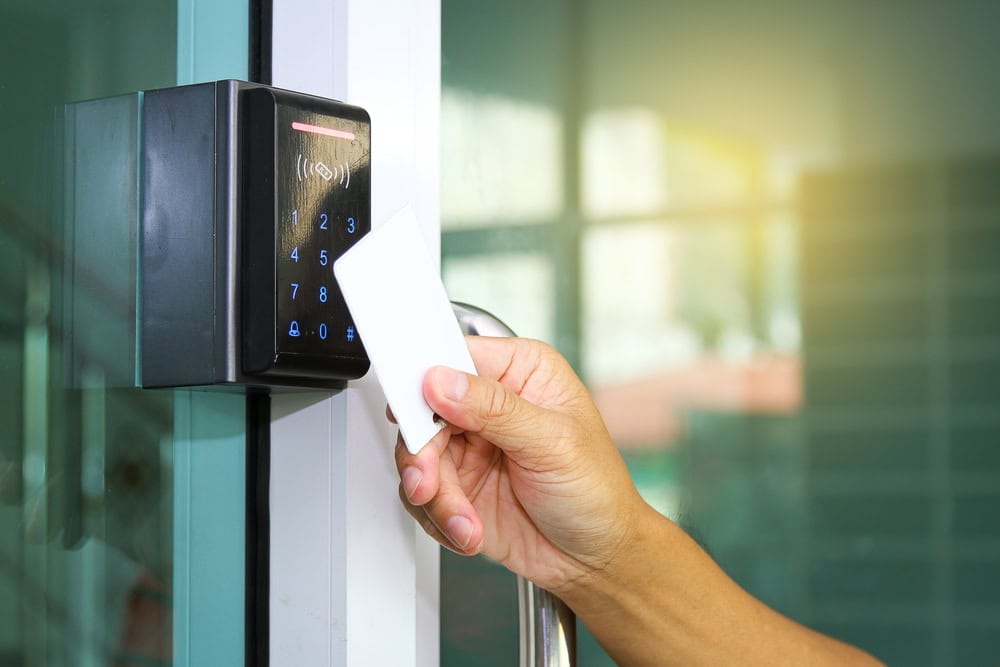
A lot of Delaware County’s housing stock was built before modern security was a consideration. The rowhouses and twins in Lansdowne, Collingdale, Darby, and Norwood are solid homes — but they were built in an era of single-cylinder deadbolts and hollow-core doors. The original hardware on many of these homes was never designed to resist a determined entry attempt, and decades of use don’t improve that situation.
This creates a specific challenge that a national monitoring company’s online questionnaire won’t catch. When a technician from a major brand shows up to install a sensor package, they’re typically working from a standard kit — not assessing whether your door frame needs reinforcement or whether your existing lock is worth keeping. They install what they brought and move on.
A proper security assessment for an older Delco home starts with the physical layer: what locks are currently installed, whether they’re properly aligned and functioning, whether the door frames are solid enough to hold under pressure, and where the actual vulnerability points are. From there, the electronic layer — sensors, cameras, monitoring — gets placed to cover what the physical layer can’t address on its own.
This is especially relevant for homeowners in areas like Drexel Hill, Sharon Hill, and Glenolden, where older housing stock is common and the homes sit close together. In dense neighborhoods, entry points are often shared walls, alley-facing rear doors, or basement windows that are easy to overlook when you’re thinking about a front-door camera and a keypad. A thorough walkthrough by someone who knows what to look for changes the quality of the final system significantly.
The goal isn’t to sell you more equipment. It’s to make sure what you do install is placed where it actually matters — and that the physical foundation underneath it is solid enough to be worth monitoring in the first place.
The most common mistake Delaware County homeowners make with property protection isn’t buying the wrong brand. It’s assuming that any system — once installed — means the job is done. Security requires a little more ongoing attention than that.
Coverage gaps are real. A camera covering your front door doesn’t see your driveway. A motion sensor in your living room doesn’t cover the basement entry. Package theft often happens in the 20 minutes between delivery and when you get home, and a doorbell camera alone won’t stop it. Understanding your actual coverage means walking your property and thinking like someone who’s looking for the easiest way in, not the most obvious one.
Contract terms deserve more scrutiny than most buyers give them. Consumer forums are full of stories about 5-year monitoring contracts with cancellation fees that run into the thousands of dollars. Some national providers lock customers into agreements where getting out costs more than staying in for the full term. Before you sign anything, understand exactly what you’re committing to — monthly cost, contract length, equipment ownership, and what happens if you move or want to cancel. Month-to-month options exist, and they’re worth seeking out.
There’s also the question of who you’re letting into your home. A security assessment means someone walks through your house and learns where every vulnerability is. That person should be licensed, background-checked, and accountable — not a subcontractor dispatched from a call center who you’ll never interact with again. In Pennsylvania, locksmiths are required to be licensed through the Office of the Attorney General. Verifying that license before any work begins is a basic step that too many homeowners skip.
We’ve been serving Delaware County from our Prospect Park location for over 140 years — five generations of the McCausland family, starting in the late 1800s and continuing today. We’ve seen every security trend come and go. What hasn’t changed is that a well-secured home starts with honest assessment, quality hardware, and someone who’s accountable for the work they do.
If you’ve made it this far, you already know more than most homeowners who are about to sign a monitoring contract. The best home security systems combine physical security — strong locks, solid door hardware, properly installed deadbolts — with electronic monitoring that has cellular backup, professional response, and no coverage gaps. Neither layer works as well without the other.
For Delco homeowners specifically, that means getting an honest assessment of what your home actually needs before buying anything. Older housing stock, commuter schedules, and neighborhood-level differences across Delaware County all affect what a smart system looks like for your address.
If you want a straight answer from someone who knows both locks and security systems, we’re here to help. Call us at 610-903-9001 — we’re happy to talk through your situation without the sales pressure.
Summary:
Article details:
Share: