A burglar alarm does more than make noise. Here's what's actually inside a modern system — and how it fits into your home's complete security picture.

Most people start thinking about a burglar alarm after something happens — a neighbor’s break-in, a string of car thefts on the block, or just that creeping feeling that the deadbolt on the front door isn’t quite enough anymore. If that’s where you are, you’re not alone, and you’re asking the right question. A good alarm system is one of the most effective deterrents against property crime that exists. But the market is noisy, the options are confusing, and the wrong choice can leave you paying monthly fees for something that doesn’t actually fit your home. Here’s what you actually need to know.
A burglar alarm system isn’t a single device — it’s a network of components that work together to detect an intrusion, trigger a response, and ideally stop a break-in before it goes any further. Understanding what’s in the system helps you evaluate what you actually need versus what you’re being sold.
At the center of everything is the control panel. Think of it as the brain — it receives signals from every sensor in the house, processes them, and decides what to do next. When a sensor trips, the panel triggers the alarm and, if you have professional monitoring, sends a signal to a 24/7 response center. Everything else in the system feeds into it.
The sensors are where most of the real work happens. Door and window sensors are the most common — they use a simple magnetic circuit that breaks when a door or window opens. When the circuit breaks while the system is armed, it sends a signal to the control panel. That’s it. Simple in concept, but extremely effective when placed correctly.
Motion detectors cover interior zones — hallways, living rooms, stairwells — and use passive infrared technology to detect body heat moving through a space. If someone makes it past the entry points, motion detectors are the second line of detection. Modern versions can be calibrated to ignore pets under a certain weight, which matters if you have a dog and don’t want a false alarm every time it wanders into the kitchen at 2 a.m.
Glass break sensors are worth mentioning because a lot of homeowners overlook them. A burglar who knows a window has a sensor might just break the glass instead of opening it. Glass break sensors detect the specific acoustic frequency of shattering glass and trigger the alarm before anyone steps through. In older Delaware County homes with large single-pane windows — common in places like Lansdowne, Darby, and Collingdale — this is a detail worth discussing with whoever installs your system.

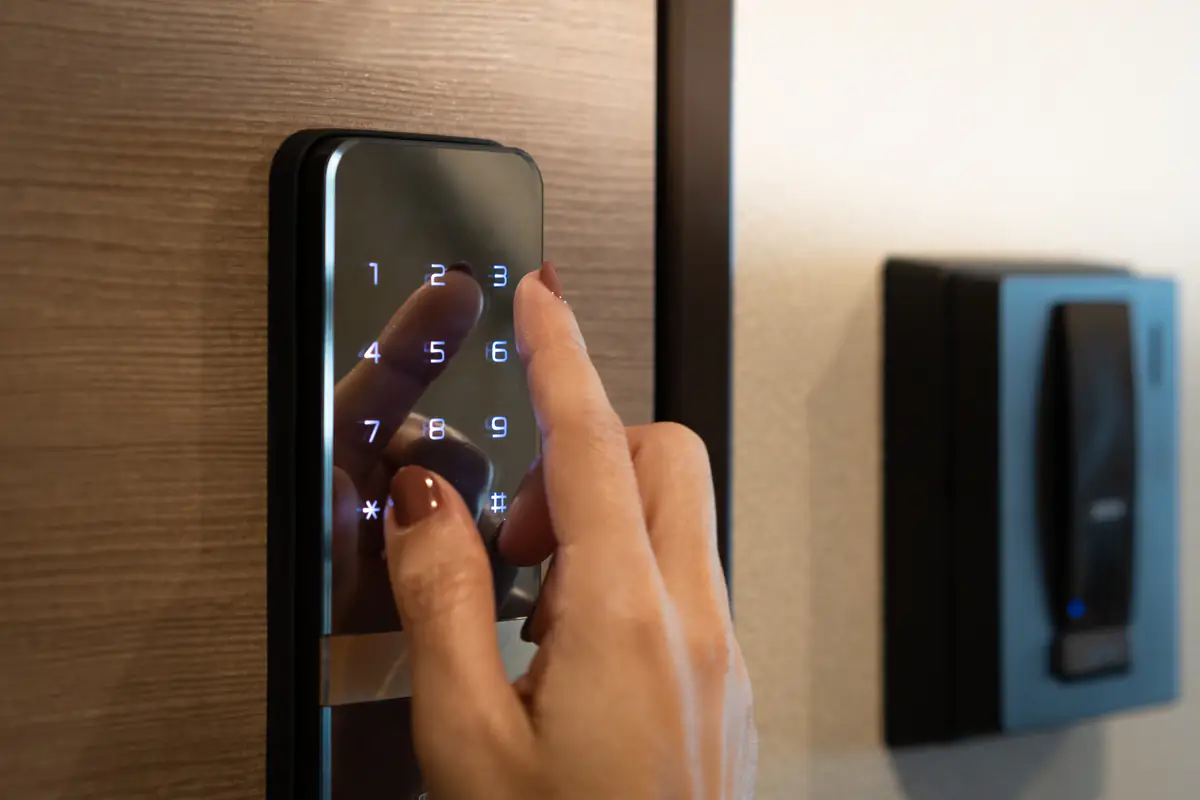
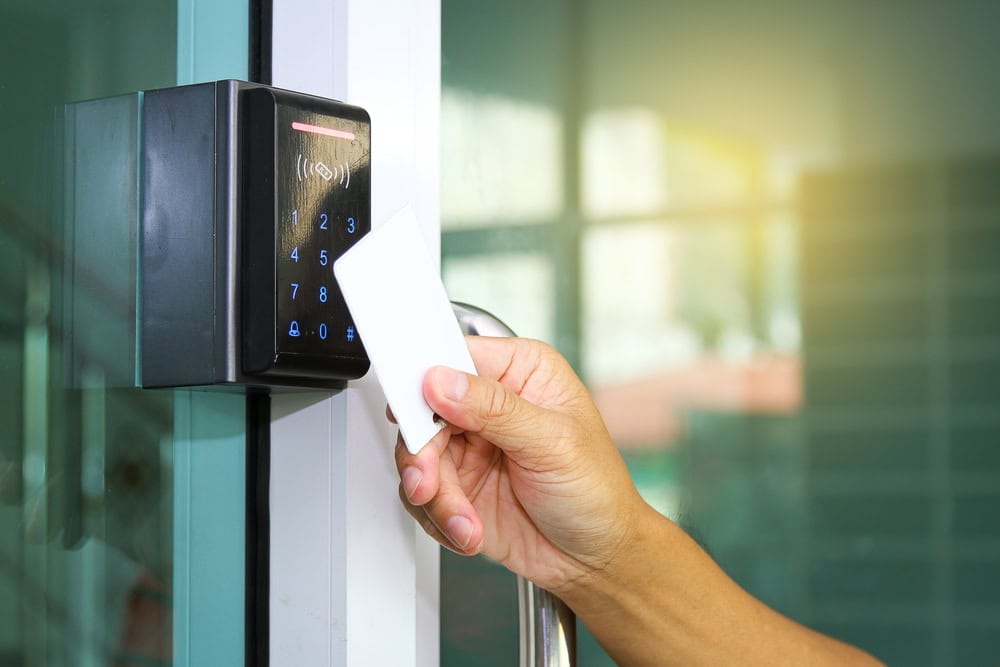
Then there’s the keypad, the exterior siren, and the backup battery. The keypad is how you arm and disarm the system. The siren is the audible deterrent — loud enough to draw attention and, in many cases, enough to send someone running. The backup battery keeps everything running during a power outage, which matters more than most people realize. A system that goes dark when the power cuts out isn’t doing its job.
One more thing that often gets overlooked: the control panel should have cellular backup. Systems that rely solely on a broadband connection or a landline can be defeated by cutting a wire or knocking out your internet. Cellular backup means the signal goes through even if someone tries to interfere with your connection.
This is the question most homeowners have but don’t always think to ask before they buy. When an alarm triggers, one of two things happens depending on your setup: the siren sounds and that’s the end of it, or the siren sounds and a monitoring center gets notified simultaneously.
An unmonitored system — sometimes called a bells-only alarm — makes noise. That’s its entire function. It relies on a neighbor hearing it, deciding it’s real, and calling 911. That’s a lot of assumptions. Monitored systems are different. When the alarm trips, the monitoring center gets an immediate alert. They attempt to contact you first to verify it’s not a false alarm. If they can’t reach you, or if you confirm there’s a problem, they dispatch emergency services. That sequence matters — it’s the difference between a loud noise and an actual response.
A common concern we hear from Delaware County homeowners is whether police will actually respond. It’s a fair question. Police departments across the Philadelphia metro area, including departments in Delaware County, do prioritize verified alarms over unverified ones. Professional monitoring centers use verification protocols — including camera footage review if cameras are part of your system — that increase the credibility of the dispatch request. Some monitoring services also have the option to send private security as a first responder, which adds another layer regardless of police availability.
One statistic that tends to land with people: research from the University of North Carolina found that 60% of convicted burglars said they would choose a different target if they saw signs of an alarm system. And 88% of burglaries are opportunistic — not planned in advance. That means a visible system, properly installed, changes the math for a would-be burglar before they ever try the door.
Want live answers?
Connect with a McCausland Lock Service expert for fast, friendly support.
If your home was built before 1970 — which describes a large portion of the housing stock in Delaware County, from the row homes in Upper Darby to the older colonials in Swarthmore and Springfield — running new wires through finished walls is a significant undertaking. Wireless alarm systems solve that problem. Instead of hardwired connections between sensors and the control panel, wireless systems communicate via encrypted radio frequency signals. No new wiring, no opening up walls, no lengthy installation process.
Wireless systems have become the dominant choice in the residential market, and for good reason. They’re faster to install, easier to expand, and just as reliable as wired systems when you’re working with quality equipment from a reputable installer.

This is where the conversation gets more interesting — and where a lot of alarm companies fall short. Most of them sell you a system and walk away. What they don’t tell you is that your alarm is only as good as the physical security it’s protecting.
Think about it this way: a door sensor tells you when a door opens. But if the door frame is weak, the deadbolt is inadequate, or the lock can be bumped open in seconds, the alarm is detecting a problem that could have been prevented. The sensor triggers after the door is already open. That’s detection, not prevention.
Modern wireless alarm systems can integrate directly with smart locks, giving you the ability to arm your alarm and lock your doors from a single app — whether you’re in your living room or sitting at a desk in Center City. When you leave for work in the morning, you can confirm the system is armed and every lock is engaged without walking back to check. When you get an alert, you can see exactly which sensor triggered and pull up a camera feed in real time.
We’ve been working with locks and security hardware in Delaware County for over 140 years — five generations of the McCausland family, starting before most of the homes in this county were even built. That history gives us a perspective that a dedicated alarm company simply doesn’t have. We can look at your front door, your deadbolt, your frame, and your entry points and tell you where the actual vulnerabilities are before we talk about sensors. That matters, because installing an alarm on a door with a weak frame is like putting a smoke detector over a gas leak.
For homeowners in communities like Haverford, Ridley Park, or Glenolden, where older construction is the norm, that combined assessment — physical hardware and electronic detection together — is often the difference between a system that genuinely protects and one that just makes noise.
Cost is the conversation most people want to have but feel awkward starting. So let’s be direct about it. The average professional installation for a home alarm system runs around $475. Monthly monitoring fees average around $40, though that varies depending on the level of service, the equipment involved, and whether cameras are part of the package. Over a year, you’re looking at roughly $480 in monitoring costs on top of installation.
Compare that to the average cost of a residential burglary: $2,799 in losses, according to industry data. That’s before you factor in the time, the stress, and the feeling of having your home violated. The math isn’t complicated.
There’s also the insurance angle. Many homeowners insurance providers offer discounts of up to 20% when you have a professionally installed and monitored alarm system. Depending on your current premium, that discount can offset a meaningful portion of the monitoring cost. It’s worth calling your insurance provider before you make a decision — some have specific requirements about the type of system or the certification of the installer.
One thing worth clarifying for anyone near the Philadelphia County line: the City of Philadelphia requires burglar alarm registration and charges a $50 annual fee. Delaware County does not have the same requirement. If you’re in a community like Darby Borough or Sharon Hill that sits close to the border, it’s worth knowing which jurisdiction applies to your address.
When you’re evaluating monitoring options, ask about cellular backup, UL-listed monitoring centers, and what the verification protocol looks like before a dispatch is made. A monitoring center that calls you first, checks your cameras if available, and then dispatches — rather than sending police on every trigger — is going to serve you better long-term and reduce the risk of false alarm fees.
A burglar alarm system is not a one-size decision. The right setup depends on your home’s age, layout, existing locks, and how you actually live in the space. What works for a new construction in Newtown Square is a different conversation than what works for a 1940s twin in Lansdowne or a detached colonial in Media.
The most important thing you can do before buying anything is get a real assessment — someone who looks at your actual entry points, evaluates your existing hardware, and tells you honestly where you’re exposed. Not a sales pitch. An assessment.
That’s the kind of conversation we’ve been having with Delaware County families for generations. If you’re ready to think through your options, reach out to McCausland Lock Service at 610-903-9001 or stop by our Prospect Park location. We’ll give you a straight answer.
—
**Frequently Asked Questions**
**What is a burglar alarm and how does it protect my home?** A burglar alarm is a system of sensors, a control panel, and an alert mechanism — either a siren, a monitoring center notification, or both — designed to detect unauthorized entry and trigger a response. The protection comes from two things: deterrence (most burglars avoid homes with visible alarm systems) and detection (when an intrusion does happen, the system responds faster than a neighbor or passerby ever could).
**Do I need a permit for a burglar alarm in Delaware County, PA?** Delaware County does not require a permit or registration for residential burglar alarms the way the City of Philadelphia does. Philadelphia charges a $50 annual alarm registration fee, which applies to homes within city limits. If you’re in a Delaware County community near the Philadelphia border — Darby Borough, Sharon Hill, or Collingdale — it’s worth confirming your address falls within the county before assuming no registration is needed. We can help clarify this when you reach out.
**Can a wireless alarm system work in an older home?** Yes, and for most older homes throughout Delaware County, wireless is actually the better choice. Homes built in the early-to-mid 20th century — which describes a lot of the housing stock in Upper Darby, Lansdowne, and Prospect Park — weren’t built with alarm wiring in mind. Wireless systems use encrypted radio signals to connect sensors to the control panel without running new wire through finished walls. Installation is faster, less invasive, and just as reliable when you’re working with quality equipment.
**How does a burglar alarm integrate with smart locks?** Modern systems can connect directly to smart locks, security cameras, and access control hardware through a shared app or platform. You can arm the alarm, lock every door, and pull up a live camera feed from your phone. When an alert comes in, you can see exactly which sensor triggered and what the camera shows — before deciding whether to call for help. This kind of integration is most effective when both the alarm and the physical hardware are installed and configured together.
**What should I look for when choosing an alarm company in Delaware County?** Start with the basics: a verifiable Pennsylvania license, proper insurance, and a physical address you can actually visit. Beyond that, ask whether they conduct a site assessment before recommending a system, whether their monitoring center has cellular backup, and what their verification protocol looks like before a police dispatch. We conduct a thorough walkthrough of your home before making any recommendations — that’s how we identify real vulnerabilities rather than just selling you a package. An alarm company that doesn’t assess your space isn’t giving you a security solution.
Summary:
Article details:
Share: