
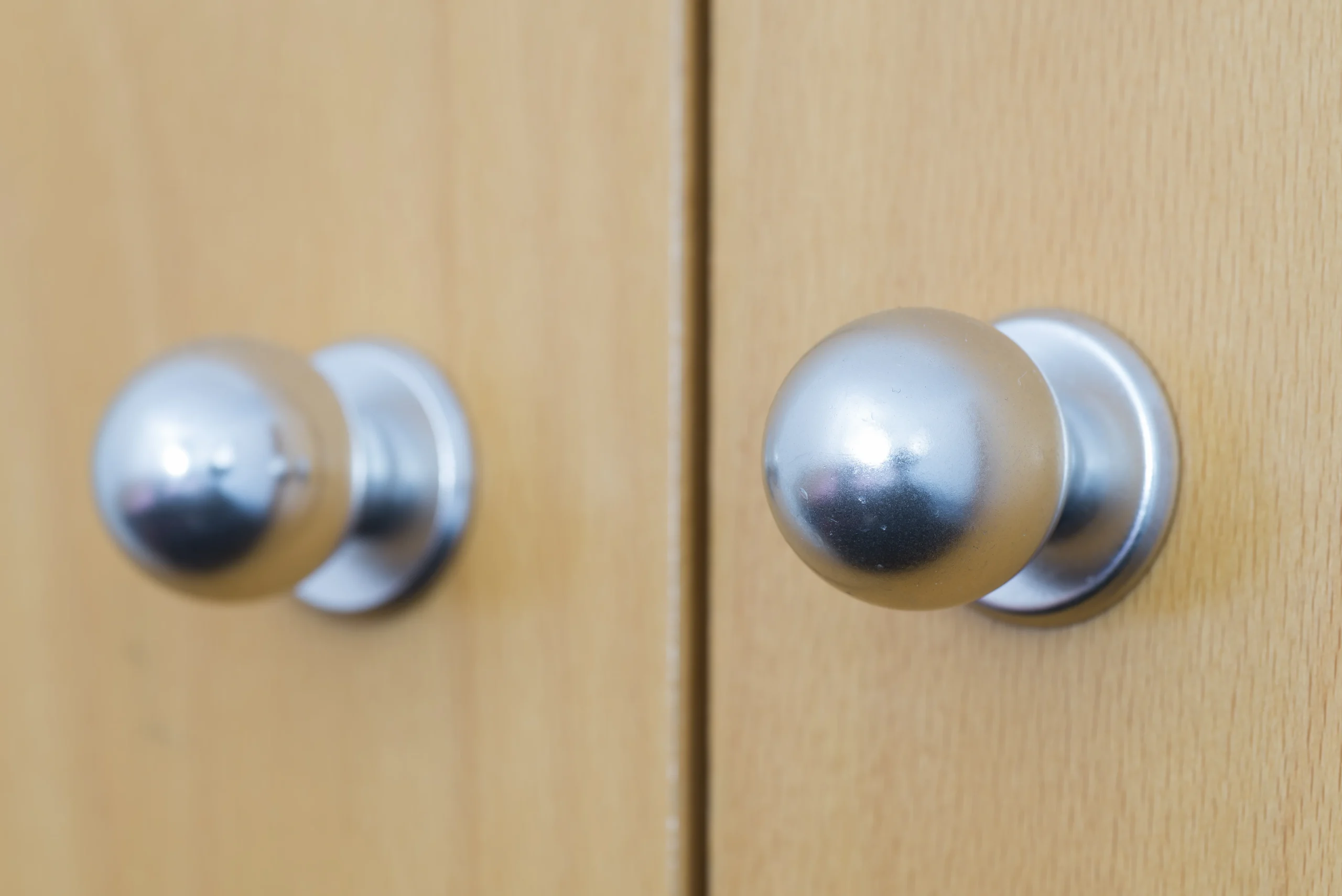
Hear from Our Customers
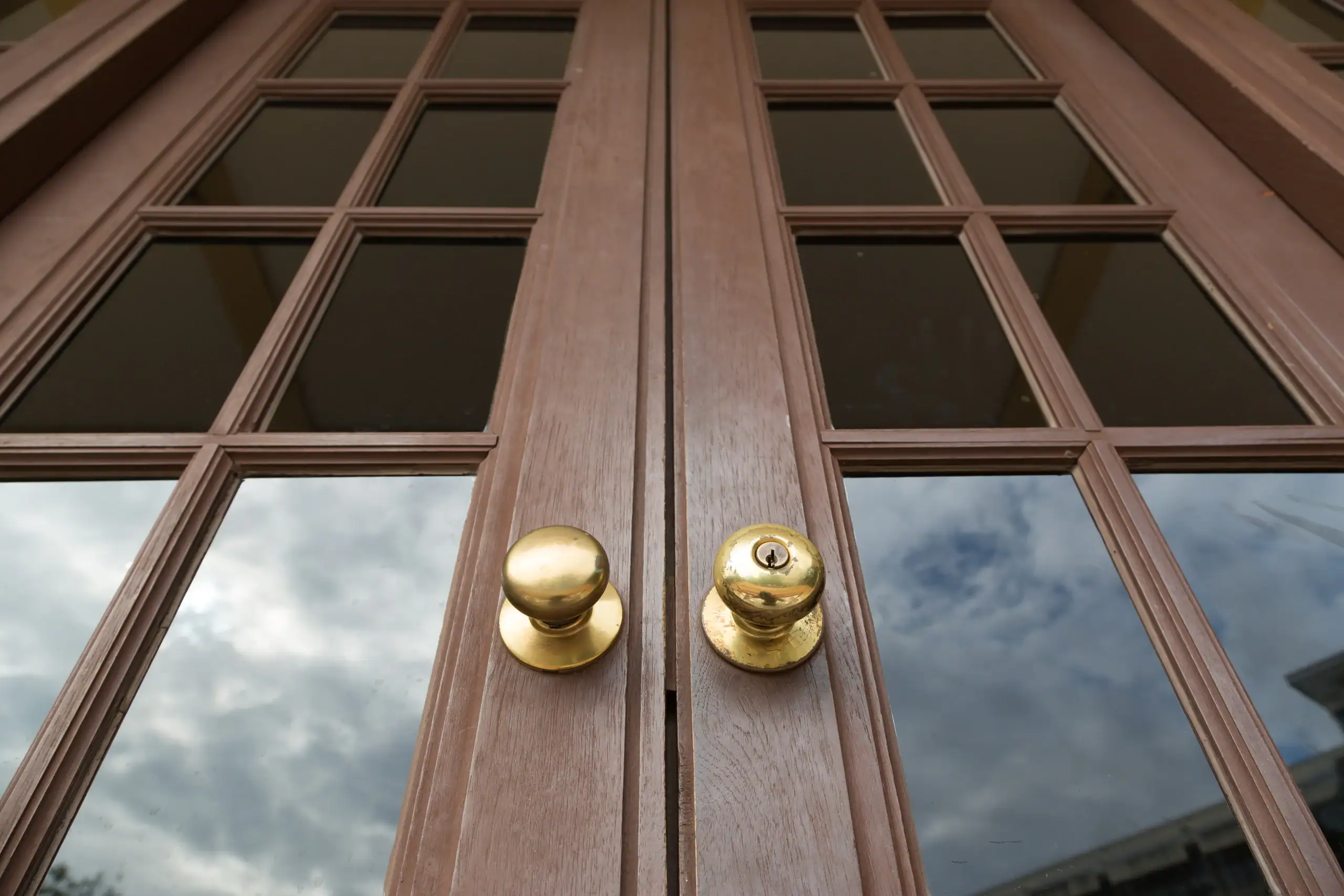
Your door closes smoothly. The latch catches without forcing it. The knob doesn’t wiggle or feel loose when you turn it.
That’s what proper door knob installation looks like. No stripped screws because someone used a power drill at the wrong angle. No misaligned latches that leave gaps in your door frame. No callbacks because the hardware wasn’t sized correctly for your door thickness in the first place.
Most installation problems come from rushing the prep work. The bore hole gets drilled slightly off-center, or the strike plate doesn’t line up with the latch. You end up fighting your own door every time you try to lock it. We’ve fixed enough of these jobs to know exactly where things go wrong, and we handle the details that prevent those issues before they happen.
You get door hardware that works the way it’s supposed to. It locks when you turn it. It opens when you need it to. And it stays that way because the installation was done right from the start.
The McCausland family has been doing locksmith work in Delaware County since the late 1800s. That’s over 140 years of helping people with the same problems you’re dealing with now.
Tom McCausland and his daughter Chrissy run the largest locksmith operation in the Delaware Valley from our fully stocked Prospect Park storefront. When you call, you’re getting the actual locksmiths—not a call center, not a subcontractor who may or may not show up.
Lester homeowners call us because we show up when we say we will, we explain what needs to happen before we touch anything, and we don’t leave until your door works correctly. We’ve been serving families in this area long enough that we’ve worked on the same houses across multiple generations. That doesn’t happen unless you do the work right.
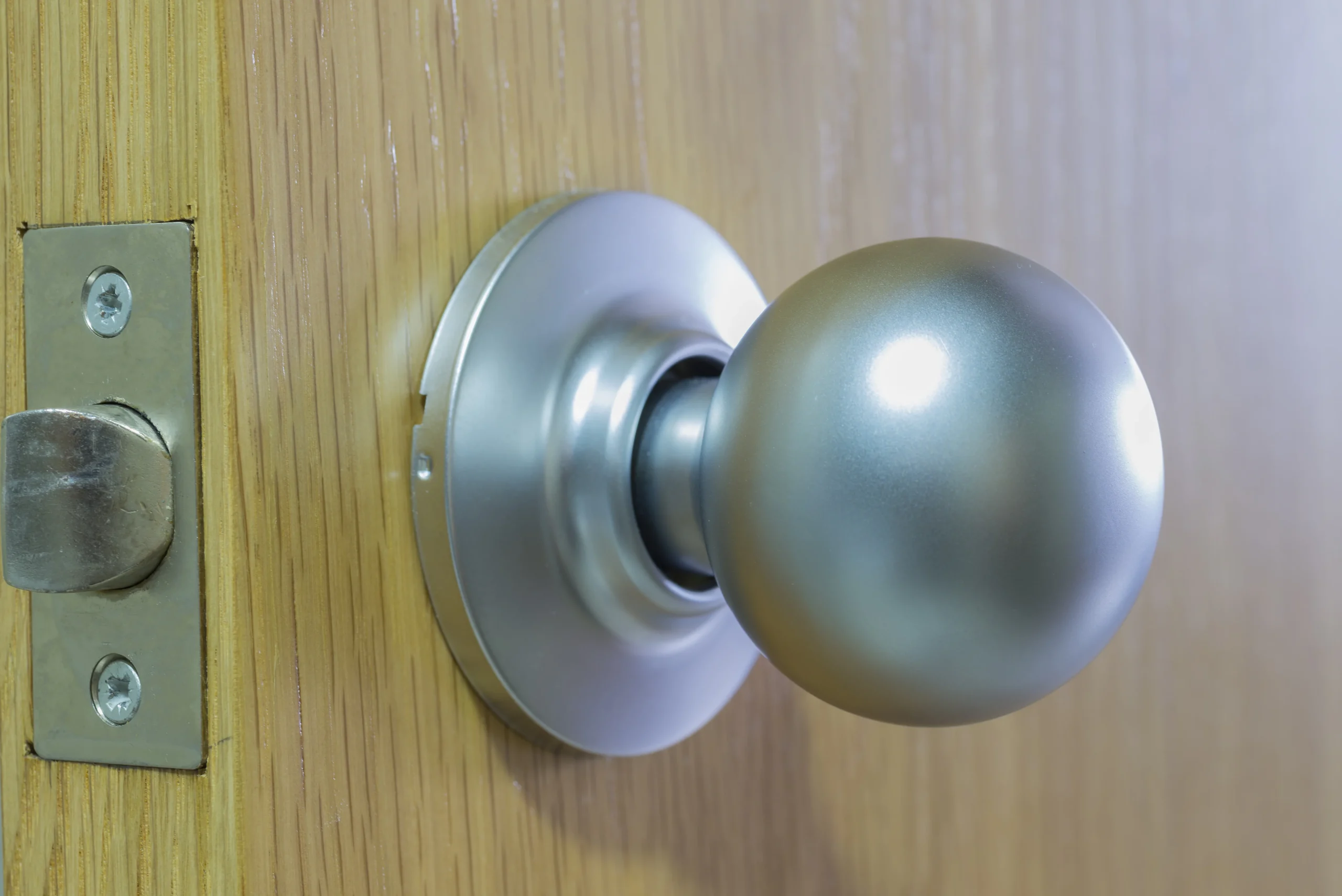
First, we assess what you’re working with. Door thickness, existing bore holes, frame condition, and whether your current hardware left any damage that needs addressing. If you’re replacing old hardware, we check for stripped screw holes or misalignment issues that could affect the new installation.
Next, we prep everything correctly. If the bore hole needs adjustment, we handle it without damaging your door. We make sure the latch aligns with the strike plate so your door actually latches when you close it. The faceplate sits flush. The screws go in straight, not cross-threaded.
Then we install your new door knob or lever. We’re working with Kwikset, Schlage, Medeco—manufacturer-approved parts that last. If you’re upgrading to a smart lock or electronic deadbolt, we program it on-site and make sure it integrates with your system correctly.
Before we leave, we test everything. The door closes without resistance. The latch engages smoothly. The lock turns without sticking. You’re not calling us back next month because something wasn’t tightened properly or the alignment was off.
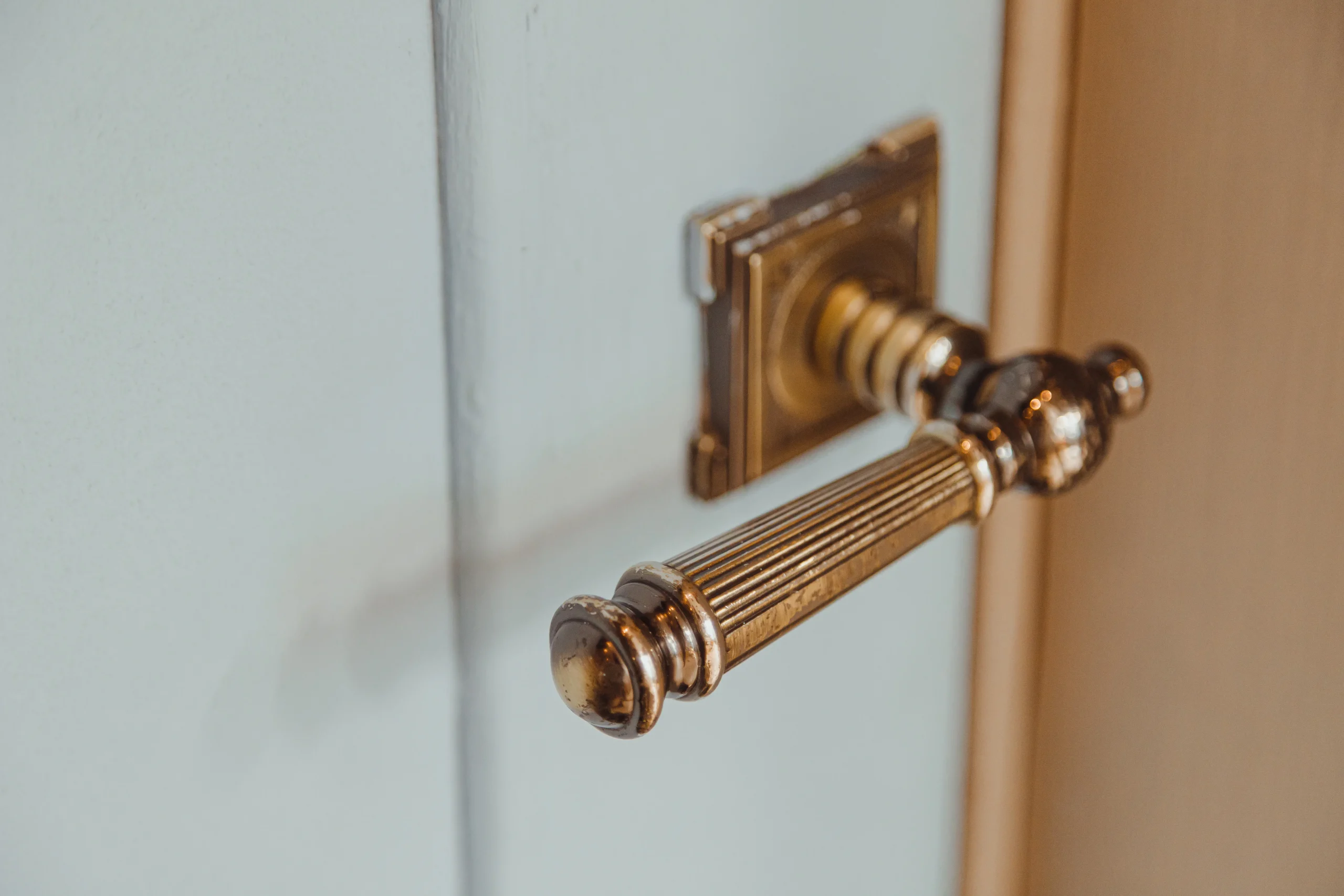
Ready to get started?
You’re getting the full installation, not just someone screwing in hardware and hoping it works. That means proper measurement, correct boring if needed, precise alignment of the latch and strike plate, and hardware that’s actually rated for your door type.
In Lester and throughout Delaware County, we see a lot of older homes with solid wood doors that need specific hardware considerations. The door thickness matters. The backset distance matters. The bore hole diameter matters. Get any of these wrong and your new door knob won’t function correctly no matter how expensive it is.
We handle lever repair and door knob replacement for residential properties throughout the area. If your existing hardware is loose, sticking, or not latching properly, we diagnose whether you need a full replacement or if the issue is installation-related. Sometimes the hardware is fine but it was never installed correctly to begin with.
Our mobile workshop carries the tools and parts needed for your specific job. We’re not making multiple trips or telling you we need to order something. We stock OEM parts from the manufacturers people actually use, and we arrive prepared to complete the work in one visit.
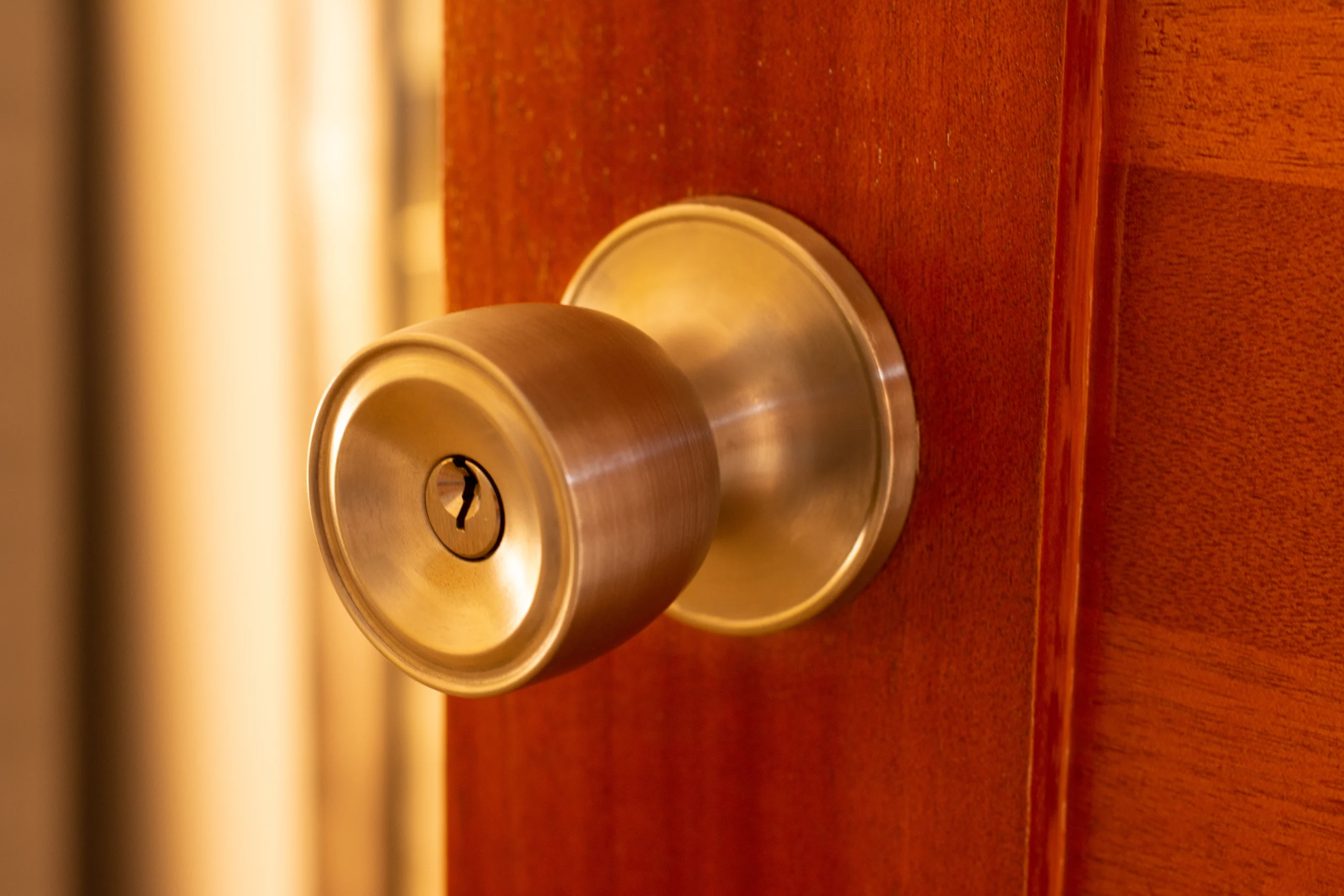
Standard passage door knob installation typically runs between $95 and $135 per door in the Lester area. That covers the labor for proper installation—measuring, boring if needed, aligning the latch and strike plate, and testing to make sure everything functions correctly.
The price changes based on what you’re installing and what condition your door is in. A basic passage knob on a pre-bored door with no existing damage is straightforward. A privacy lock that requires deadbolt coordination, or a smart lock that needs programming, takes more time. If we’re fixing problems from a previous bad installation—stripped screw holes, misaligned bore holes, damaged door frames—that adds to the scope.
We explain what your specific job requires and what it costs before we start. No surprises, no upselling you on things you don’t need. You know exactly what you’re paying for.
You can install a door knob yourself if the door is already prepped correctly and you’re comfortable with precise measurements. But most DIY installations we get called to fix failed because of alignment issues, not because the homeowner couldn’t turn a screwdriver.
The most common mistake is drilling the bore hole slightly off-center or at the wrong height. You don’t realize it until after you’ve installed the hardware and the latch doesn’t line up with the strike plate. Now your door won’t close properly, or it closes but won’t latch. Fixing that is harder than doing it right the first time.
Cross-threading is another issue. People use power drivers and approach the screws at an angle because the hardware is slightly misaligned. The screws strip, the holes get damaged, and now you need a professional to repair what should have been a simple installation. If you’re not confident about the prep work and alignment, calling us saves you time and prevents damage to your door.
A passage knob is for doors that don’t need to lock—hallways, closets, rooms where you just need the door to latch closed. You turn the knob and the door opens. There’s no locking mechanism, which makes them simpler to install and less expensive.
A privacy lock has a locking button or turn mechanism on the interior side. You see these on bathrooms and bedrooms where you want the option to lock the door from inside but don’t need key access. They’re still relatively simple, but the installation requires proper alignment so the locking mechanism engages correctly.
Then you have keyed entry locks, which require a key on the exterior and usually have a turn lock on the interior. These are what you’d use on exterior doors or any door where you need controlled access. The installation is more involved because the lock cylinder needs to be properly seated and the key mechanism has to align precisely with the latch assembly. If you’re upgrading to a smart lock or electronic deadbolt, that’s another level of complexity because you’re dealing with programming and battery compartments in addition to the mechanical installation.
A straightforward door knob installation on a properly prepped door takes about 20 to 30 minutes. That’s for a standard passage or privacy lock where the bore holes are already correct and we’re just swapping out old hardware for new.
If we’re installing hardware on a door that’s never had it before, or if the existing holes don’t match your new hardware specs, it takes longer. We need to drill new bore holes, chisel out the mortise for the latch plate, and install the strike plate in the door frame. That can run 45 minutes to an hour depending on door material and condition.
Lever repair or fixing a botched DIY installation adds time because we’re correcting existing problems. Stripped screw holes need to be filled and re-drilled. Misaligned latches might require adjusting the strike plate position or shimming the door. Smart lock installation takes longer because of the programming and testing required to make sure it integrates with your system correctly. We give you a realistic timeframe once we see what we’re working with.
Not if it’s done correctly. Professional door knob installation shouldn’t leave any damage to your door, frame, or finish. We use the right tools, we measure precisely, and we don’t force hardware into place if something isn’t aligned.
The damage happens when people rush the boring process or try to make hardware fit holes that aren’t sized correctly. You end up with splintered wood around the bore hole, chipped paint or finish, stripped screw holes from cross-threading, or cracks in the door from over-tightening hardware that wasn’t seated properly.
We’ve been doing this long enough to know how to work with different door materials—solid wood, hollow core, steel, fiberglass. Each one requires specific techniques to avoid damage during installation. If your door has existing damage from previous hardware or a bad installation attempt, we address that before installing new hardware so you’re not just covering up a problem that will get worse over time.
Yes. Smart locks and electronic deadbolts are becoming standard in newer homes and renovations throughout Lester and Delaware County. We install them correctly so they actually work the way they’re supposed to—which isn’t always the case when people try to DIY these installations.
The mechanical installation is similar to traditional hardware, but you’re also dealing with battery compartments, circuit boards, and wireless connectivity. The lock needs to be installed at the correct angle so the motorized bolt operates smoothly. The strike plate alignment has to be precise because electronic locks don’t have the same tolerance for misalignment that manual locks do.
Then there’s the programming. We set up your access codes, connect the lock to your home system if applicable, and test all the features before we leave. Keypad functionality, auto-lock timing, low battery alerts—we make sure everything is configured correctly. If you’re integrating with a smart home system, we verify the connection works and walk you through the controls. You’re not figuring this out on your own after we leave.