
Hear from Our Customers
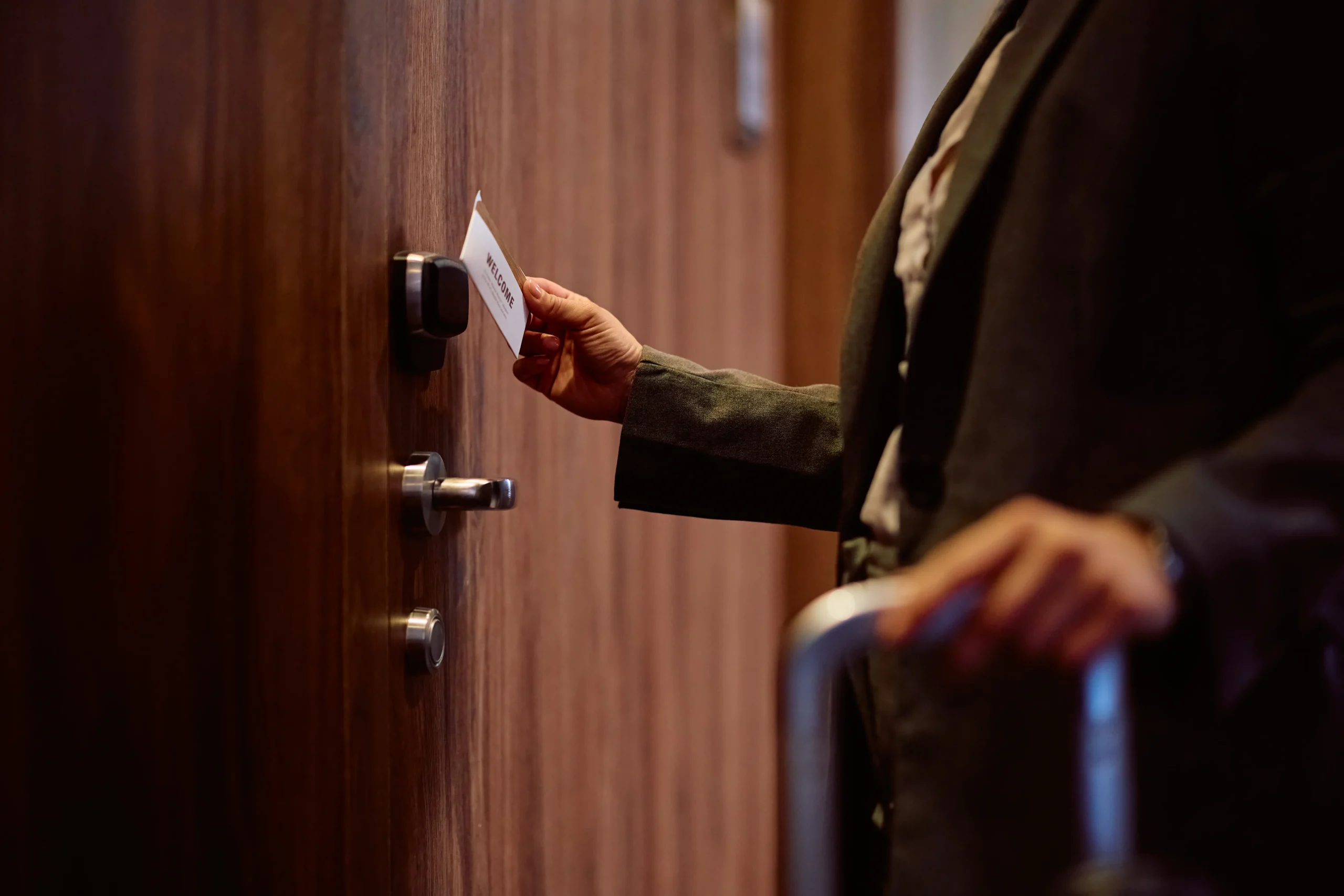
Traditional keys get copied. Codes get shared. You’re left wondering who actually has access to your building after hours.
Access control systems fix that. You assign credentials to specific people, set time windows for when they work, and get alerts when someone enters outside those hours. If an employee leaves, you deactivate their access in seconds instead of rekeying locks across your entire facility.
The system logs every entry. You see who came in, when they arrived, and which door they used. That data matters when inventory goes missing or when you need to verify who was on-site during an incident. No guessing. No relying on memory or security footage alone.
You also cut costs. No more emergency lockouts because someone lost their keys. No more paying to rekey locks every time staff changes. Your building access control system handles it digitally, and you manage everything from your phone or computer.
We’ve been handling locks and security in this area since the late 1800s. We’re not new to Thornton or the surrounding Delaware County communities. We’ve seen how businesses here operate, what security challenges they face, and what actually works long-term.
Our storefront sits in Prospect Park, just minutes from Thornton. You can walk in, talk to someone who knows the area, and get answers without a sales pitch. We install door access control systems, integrate them with existing security setups, and handle service calls when something stops working right.
We’re a family business. Tom McCausland and his daughter Chrissy run the operation now, backed by trained technicians who are members of the American Locksmith Association of Pennsylvania. We’ve built our reputation on showing up when we say we will and fixing things correctly the first time.

We start with a site visit to your Thornton location. You show us which doors need access control, who needs entry, and what level of security you’re after. We look at your current setup, ask about your daily operations, and figure out what type of system makes sense for your building.
Next, we design the system. That includes choosing between card readers, keypads, biometric scanners, or mobile credentials. We map out where hardware goes, how it connects, and whether you want cloud-based management or a local server. You get a clear quote with no surprise fees later.
Installation day, our crew shows up on time. We mount readers, run wiring, install control panels, and connect everything to your network. We test each door, program user credentials, and walk you through how to add or remove access for employees. The whole process typically takes one to three days depending on how many entry points you have.
After installation, you’re not on your own. We handle maintenance, troubleshooting, and system updates. If a reader fails or you need to expand the system later, we’re a local call away.
Ready to get started?
Every access control system installation includes hardware, software, and setup. You get the physical components—card readers, electric strikes or magnetic locks, control panels, and power supplies. We install everything according to manufacturer specs and local building codes.
You also get the management software. That’s where you control who has access, set schedules, and pull entry logs. Most systems we install now are cloud-based, so you manage access from anywhere. Some Thornton businesses prefer on-premise servers for data control, especially in healthcare or finance where compliance matters.
Training is part of the package. We show you how to add new employees, deactivate credentials, run reports, and troubleshoot basic issues. You’re not reading a manual alone trying to figure it out.
Thornton businesses deal with specific challenges. Many operate in older buildings that weren’t designed for electronic access control. We retrofit systems into existing door frames without major construction. We also integrate with gate access control systems for properties with parking areas or loading docks, which is common in the industrial parts of Delaware County.
Our warranty covers both labor and parts. If something fails because of installation error or defective equipment, we fix it at no charge. You’re also getting access to emergency service—if your system goes down and you can’t secure your building, we respond within 30 to 60 minutes.
Most commercial installations in Thornton run between $2,500 and $4,300 per door when you factor in hardware, labor, and software. A small office with two or three entry points might spend $7,500 to $13,000 total. Larger facilities with ten or more doors can expect $25,000 to $40,000 depending on the technology you choose.

Basic card reader systems cost less than biometric or mobile credential setups. If you want integration with existing CCTV or alarm systems, that adds to the price. Cloud-based systems usually include monthly fees between $50 and $200 depending on how many users you manage.
We give you an exact quote after seeing your building. Every property is different, and we don’t believe in ballpark estimates that turn into surprise invoices later.
Yes. Most modern access control systems talk to other security equipment through standard protocols. When someone badges in, the system can trigger your cameras to start recording at that specific door. If someone tries to force entry, it sends an alert to your alarm monitoring company.
Integration works best when your existing equipment is relatively current. Older CCTV systems that use analog technology may need upgrades to connect properly. We assess what you have during the site visit and tell you what’s possible without replacing everything.
The benefit of integration is a unified security view. You see access events, video footage, and alarm status in one interface instead of juggling three separate systems. That saves time when you’re investigating an incident or just checking who’s in the building right now.
Access control systems include battery backup that keeps doors functioning during power outages. The backup typically lasts 4 to 24 hours depending on the system size. Doors can be programmed to fail secure (stay locked) or fail safe (unlock) when power dies, depending on fire code and your security needs.
If you lose internet with a cloud-based system, the local control panel keeps working. It stores credentials and access rules locally, so employees can still badge in. You just can’t make changes remotely until connectivity returns. Entry logs save locally and sync to the cloud once you’re back online.
We install uninterruptible power supplies (UPS) for clients who can’t afford any downtime. That gives you hours of runtime and protects equipment from power surges. For buildings in Thornton that experience frequent outages, it’s worth the extra investment.
A basic two or three-door installation usually takes one full day. We mount hardware, run wiring, configure the system, and test everything before we leave. You can start using it immediately.
Larger projects with ten or more doors typically take two to three days. We work during your off-hours if you can’t have us drilling and running cable while you’re trying to operate. Some Thornton businesses prefer weekend installations to avoid disrupting weekday operations.
Retrofitting access control into older buildings sometimes takes longer. If we need to reinforce door frames, upgrade electrical, or work around historic preservation requirements, that adds time. We give you a realistic timeline upfront so you can plan accordingly.
Key cards work, but you have other choices. Mobile credentials turn smartphones into access devices—employees tap their phone against the reader just like a card. That eliminates the need to issue and track physical cards.
Biometric readers use fingerprints or facial recognition. Nobody can share or lose their fingerprint, which matters for high-security areas. Some Thornton businesses use biometric for server rooms or inventory storage while using cards for general entry.
Keypads are still common for areas where multiple people need access but you don’t want to issue individual credentials. You just change the code periodically instead of managing cards or phones.
You can mix methods in the same system. Use mobile credentials for salaried staff, cards for hourly workers, and keypads for shared spaces. The system handles all of it without issue.
Card readers need cleaning every few months, especially in high-traffic areas where dust and fingerprints build up. Dirty readers cause false rejections and frustrated employees. We recommend wiping them down with approved cleaning solutions—not harsh chemicals that damage the electronics.
Software updates happen automatically with cloud-based systems. On-premise systems need manual updates, which we handle during annual service visits. Updates fix security vulnerabilities and add new features.
Batteries in wireless components and backup power supplies need replacement every three to five years. We track that during maintenance checks and replace them before they fail. Electric strikes and magnetic locks are mechanical parts that eventually wear out, usually after five to ten years of constant use.
Most Thornton businesses schedule annual maintenance visits. We test every door, verify credentials are working correctly, check wiring connections, and update firmware. Catching small issues during routine maintenance prevents bigger problems that lock you out of your own building.