
Hear from Our Customers
You know the drill. An employee leaves and suddenly you’re wondering who still has a key. A contractor needs building access for three days and you’re handing over metal that could be copied anywhere. Someone props a door open and your entire security system becomes pointless.
Access control systems fix that. You decide who gets in, when they get in, and which doors they can open. An employee leaves? You revoke their credential in thirty seconds from your phone. Need to let a vendor in early? Grant temporary access that expires automatically. Want to know if someone entered after hours? The system logs every entry.
This isn’t about being paranoid. It’s about running a tighter operation. No more rekeying locks every time someone quits. No more wondering if that back door is actually locked. No more scrambling when you need to change access for multiple people across multiple entry points.
The McCausland family has been doing locksmith work since the late 1800s. That’s not marketing copy—that’s just how long we’ve been here. Tom McCausland runs the business today with his daughter Chrissy, operating out of our Prospect Park location just minutes from Nether Providence.
We’re the largest locksmith company in the Delaware Valley, but we still answer our own phones. When you call, you’re talking to someone who actually knows your building and your neighborhood. We don’t use subcontractors or call centers. The person who quotes your job is often the same person who installs it.
Nether Providence businesses—whether you’re on Providence Road near the SEPTA line or tucked into one of the commercial pockets near Wallingford—get the same treatment. We show up when we say we will. We install it right the first time. And if you call us in two years with a question, we’ll remember your setup.
First, we walk your property. Not a sales pitch—an actual assessment. We look at your entry points, ask about your security concerns, and figure out which doors need what level of control. Some businesses need card readers at every door. Others just need to lock down a few sensitive areas. We’re not here to oversell you.
Then we spec the system. You’ll know exactly what hardware goes where, how employees will access the building, and what the management interface looks like. We explain the options—proximity cards, key fobs, mobile credentials, keypads—and help you pick what actually makes sense for how your people work.
Installation happens on your schedule. We coordinate around your business hours because we know you can’t just shut down for a day. Our techs mount the readers, wire the locks, integrate with your existing doors, and program the system. Before we leave, we test every entry point and train your team on how to add users, run reports, and adjust access levels.
After install, you’re not on your own. We’re local. If something stops working or you need to add doors later, you call the same number and talk to people who installed your system. No hunting for support. No waiting on hold with a national call center.
Ready to get started?
You get hardware that works with your existing doors. We install electromagnetic locks, electric strikes, or panic bar systems depending on your building code requirements. Nether Providence commercial properties often need specific fire code compliance—we handle that. The readers mount cleanly and the wiring stays hidden.
You get a management system you can actually use. Most of our clients manage access from a web browser or phone app. Add a new employee in two minutes. Revoke access instantly when someone leaves. Set schedules so certain doors only unlock during business hours. Pull reports to see who entered and when.
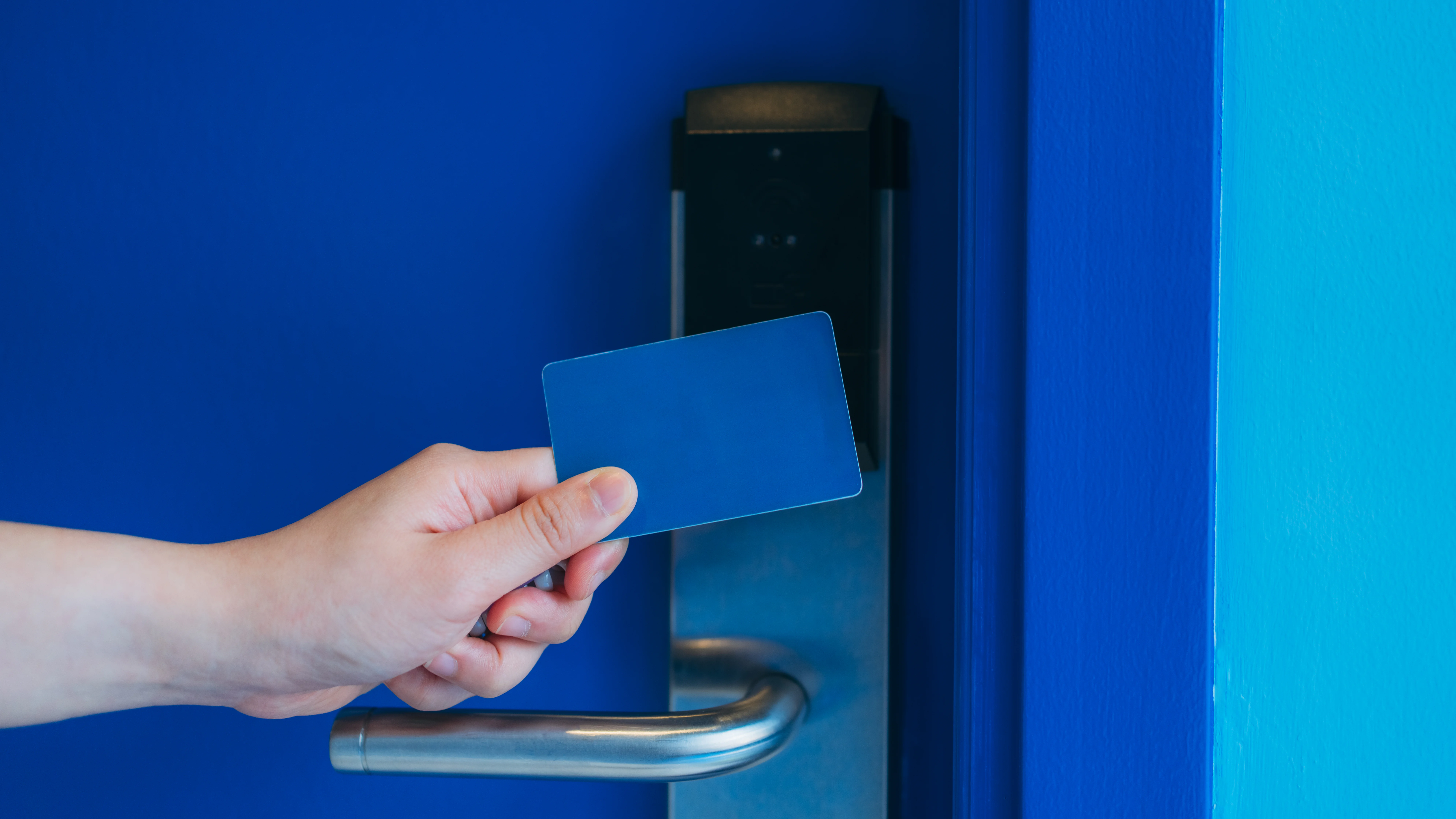
You get credentials that fit your workflow. Proximity cards are cheap and easy to replace. Key fobs clip to existing keychains. Mobile credentials let employees use their phones. Some businesses mix all three. We help you figure out what works for your team and your budget.
You get integration with what you already have. If you’re running security cameras, we can sync access events with video footage. If you have an alarm system, we can tie it into the access control so disarming the alarm also unlocks certain doors. The goal is one cohesive system, not five separate platforms you’re trying to manage.

For most small commercial properties in Nether Providence, you’re looking at $2,300 to $5,000 per door in 2025. That includes the reader, the lock hardware, the controller, and installation. A single entry point with a card reader and electric strike runs closer to the lower end. Multiple doors with electromagnetic locks and integration with existing security systems push toward the higher end.
The real cost depends on what you’re controlling. A simple front door setup with ten employee credentials costs less than a multi-door system with scheduled access, mobile credentials, and camera integration. We don’t quote over the phone because every building is different. But after a fifteen-minute walkthrough, we can give you an exact number with no surprises.
Most businesses find the system pays for itself pretty quickly. You stop rekeying locks every time someone leaves. You eliminate the cost of emergency lockouts because you can unlock doors remotely. And you reduce security incidents because you actually know who’s entering your building. It’s not just a security upgrade—it’s an operational improvement.
Usually, yes. Most commercial doors in Nether Providence can be retrofitted with access control hardware without replacing the entire door or frame. We add an electric strike or magnetic lock to your existing setup, mount the card reader, and run the wiring to a controller. Your doors stay in place.
There are exceptions. Really old doors or frames that don’t meet current fire codes might need upgrades. Hollow-core doors can’t support certain lock types. Glass doors require specific mounting hardware. But in most cases, we’re working with what you have. That’s part of why we do the walkthrough first—we catch those issues before quoting the job.
If you do need door hardware upgrades, we handle that too. We’ve been installing commercial door hardware for over a century, so panic bars, closers, and ADA-compliant handles are routine for us. The goal is a complete system that works correctly and meets code, not just slapping a reader on a door and hoping it holds.
Most access control systems have built-in fail-safes. If power goes out, electromagnetic locks typically release so people can exit (fire code requirement). If the network goes down, many controllers store credentials locally and keep working until connectivity returns. You don’t lose access just because your internet hiccups.
If there’s a hardware failure—a reader stops working or a lock malfunctions—you call us. We’re in Prospect Park, minutes from Nether Providence. For emergency lockouts, we typically get Delaware County businesses open in twenty to thirty minutes. We carry common parts on our trucks, so many repairs happen on the spot without ordering components and waiting days.
You also have override options. Most systems include physical key overrides for emergencies. Some businesses keep a master credential in a secure location. And because you can manage the system remotely, you can often unlock a door from your phone if someone’s locked out and you’re not on-site. The system is designed to keep you secure, not trap you outside your own building.
That’s the whole point of access control—it makes employee turnover simple. When you hire someone, you issue them a credential (card, fob, or mobile access) and assign their permissions in the system. Takes about two minutes. You decide which doors they can open and what hours their access works.
When someone leaves, you delete their credential from the system. Their card stops working immediately. No need to collect keys, rekey locks, or wonder if they made copies. If they try to use their old card, it won’t unlock anything. You can even set credentials to expire automatically on a specific date, which is useful for contractors or temporary staff.
The system logs everything, so you can see who entered which door and when. If you need to audit access or investigate an incident, you pull a report. If you need to adjust someone’s permissions—maybe a manager gets promoted and needs access to additional areas—you update it in the software. The whole system is built around the reality that your team changes and your security needs to keep up without constant hassle.
You can use either, or mix them. Proximity cards are still the most common—they’re cheap, durable, and easy to replace if someone loses one. Employees just tap or wave the card near the reader and the door unlocks. Key fobs work the same way but attach to a keychain.
Mobile credentials are becoming more popular, especially after 2020 when businesses started preferring contactless options. Employees download an app, and their phone becomes their credential. They tap their phone to the reader or, with some systems, the door unlocks automatically when they approach (Bluetooth-based). It’s convenient and you don’t have to manage physical cards.
Some businesses use both. Office staff get mobile credentials because they always have their phones. Warehouse or maintenance workers get cards because they’re more rugged and don’t depend on a charged phone battery. We help you figure out what makes sense for your operation. The hardware supports multiple credential types, so you’re not locked into one method forever.
For a single entry point, we’re usually done in a few hours. For a small office with three to five doors, plan on a full day. Larger buildings with ten or more access points might take two days, depending on how much wiring we need to run and whether we’re integrating with existing security systems.
The timeline depends on your building. If we’re working with newer construction and there’s already conduit in place, installation goes faster. Older buildings where we need to fish wire through walls or coordinate with fire alarm systems take longer. We give you a realistic timeframe during the walkthrough so you can plan around it.
We work around your schedule. Most businesses have us install outside of business hours or on weekends so there’s no disruption. If that’s not possible, we section off the work area and keep the rest of your operation running. Once installation is done, we program the system, test every door, and train your team before we leave. You’re not waiting days for someone to come back and finish the job.