
Hear from Our Customers
Your building doesn’t sleep. Neither should your security. With a proper access control system, you’re not handing out keys that get copied or lost. You’re assigning credentials that you can turn on, turn off, or schedule down to the minute.
That means your office manager doesn’t need a key to the server room. Your cleaning crew gets access Tuesday and Thursday nights only. And when someone leaves the company, you revoke their access from your phone before they’re out the parking lot.
You also get a record. Who opened which door and when. That’s not paranoia—it’s accountability. And when something goes missing or a door gets left open overnight, you’ll know exactly what happened instead of guessing.
We’ve been in the locksmith business for over 140 years. That’s four generations of solving security problems in Delaware County, including right here in Lansdowne. We’re not a franchise or a call center—we’re a family-run shop in Prospect Park with a fully stocked storefront and mobile fleet.
We’ve been installing access control systems for almost 40 years. We’ve handled everything from single-door setups at small offices to multi-building systems with hundreds of access points. And we’ve never run into a configuration we couldn’t handle.
When you call, you’re talking to someone who knows your area, understands your building type, and has probably worked on a dozen properties just like yours.

First, we come out and walk your property. You show us which doors matter, who needs access where, and what problems you’re trying to solve. We’re looking at door types, existing wiring, network access, and whether you want everything managed locally or through the cloud.
Then we recommend a system. Could be card readers, keypads, biometric scanners, or mobile credentials. We’ll tell you what makes sense for your setup and your budget—and what doesn’t. No upselling you into features you won’t use.
Once you approve the plan, we schedule the install. We mount the hardware, run any necessary wiring, connect everything to your network or our management platform, and program the system based on your access rules. Before we leave, we walk you through how to add users, pull reports, and make changes on your own.
After that, you’re live. And if something stops working or you need to expand the system later, we’re 20 minutes away.

Ready to get started?
You get hardware that lasts. We use components from manufacturers like Schlage, Medeco, and other commercial-grade brands—not the consumer stuff that fails in six months. Every reader, lock, and controller is built for daily use in a business environment.
You also get flexibility. Your system can start with one door and scale to a hundred. You can manage it from your office computer, from home, or hand off admin duties to us if you’d rather not deal with it. Add users in seconds. Set schedules by department. Get alerts when doors are propped open or forced.
For Lansdowne businesses, this matters. You’ve got a mix of retail, offices, and multi-tenant buildings in town. A good access control system means property managers can grant access to tenants without rekeying. It means business owners on Lansdowne Avenue can monitor their back doors remotely. And it means you’re not replacing locks every time someone loses a key or a contractor finishes a job.
We also integrate with your existing security setup—CCTV, alarms, intercoms. So if someone badges in at 2 a.m., your camera footage syncs with that event. Everything works together instead of in silos.

It depends on how many doors you’re securing and what type of credentials you want to use. A single-door system with a basic card reader might run you a few hundred dollars plus installation. A multi-door setup with biometric readers, cloud management, and integration with cameras or alarms will cost more—sometimes a few thousand depending on the scope.
The bigger cost isn’t always the hardware. It’s whether you need new wiring, if your doors need electric strikes or mag locks, and how much configuration is involved. Older buildings in Lansdowne sometimes need more prep work. Newer construction is usually cleaner.
We give you a flat quote after the walkthrough. No surprises, no hourly billing that spirals. And we’ll tell you up front if there’s a cheaper way to get what you need.
You can manage it yourself. We’ll train you on how to add and remove users, set schedules, pull access reports, and troubleshoot basic issues. Most cloud-based systems have simple dashboards that don’t require an IT degree to figure out.
That said, some businesses prefer to hand off management to us. We can host the system, handle all the user changes, and monitor it for you. There’s no requirement either way—it’s based on whether you want control or convenience.
If you do manage it yourself and something breaks, we’re still here. You’re not locked into a contract with a national provider who puts you on hold for 45 minutes. You call us, we come out, and we fix it. That’s the advantage of working with a local company that’s been in Delaware County for over a century.
If the system goes offline, most setups have a fail-safe. Depending on how it’s configured, doors either default to locked or unlocked. We usually recommend fail-secure for exterior doors and fail-safe for interior ones—so if power cuts out, people can still exit but can’t get in from outside.
If someone gets locked out because their credential isn’t working, you can override it from the management software or we can come out and troubleshoot. Could be a dead card, a reader that needs adjustment, or a permission that wasn’t set right. Takes a few minutes to diagnose.
We also keep parts in stock. If a reader dies or a lock fails, we’re not waiting two weeks for a replacement to ship. We pull it from inventory, swap it out, and you’re back online the same day. That’s why we run the largest locksmith operation in the Delaware Valley—we stock what other companies have to order.
Most of the time, yes. We can retrofit electric strikes or magnetic locks onto your current doors without replacing the whole frame. If you’ve got commercial-grade doors and hardware already, the integration is usually straightforward.
Older doors or residential-grade hardware might need upgrades. Hollow-core doors won’t support a mag lock. Worn-out frames won’t hold an electric strike properly. We’ll tell you during the walkthrough if anything needs reinforcement or replacement.
The goal is to work with what you have whenever possible. Ripping out doors and frames gets expensive fast, and it’s usually not necessary. We’ve installed access control on everything from historic buildings in Delaware County to brand-new construction—there’s almost always a way to make it work without starting from scratch.
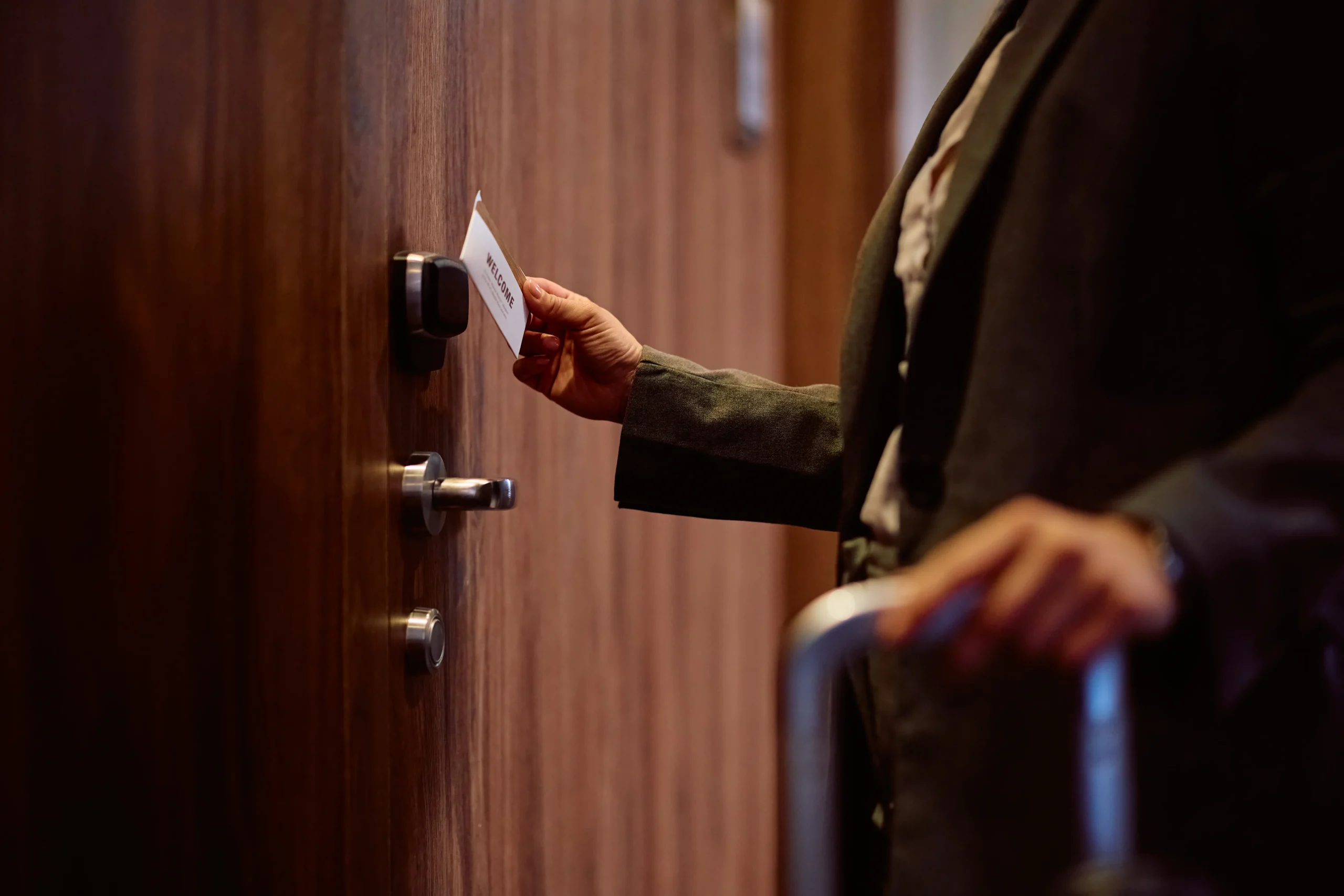
Yes. Mobile credentials are becoming the standard, especially with cloud-based access control systems. Your employees download an app, and their phone becomes their key. They tap or wave it near the reader, and the door unlocks. No cards to carry, no fobs to lose.
It also makes management easier on your end. When you hire someone, you send them a digital credential. When they leave, you delete it. No waiting for cards to arrive or wondering if someone made a copy.
The catch is that your access control system needs to support mobile credentials, and your readers need Bluetooth or NFC capability. Not every older system has that. If you’re installing new, we’ll set you up with hardware that handles it. If you’re upgrading an existing system, we’ll let you know if your current readers are compatible or if you need to swap them out.
For a single door, we can usually get you up and running in a few hours. For multi-door systems, plan on a day or two depending on how much wiring and configuration is involved. If we’re integrating with cameras, alarms, or other security systems, add some time for testing and syncing everything.
We don’t drag it out. We show up with everything we need, install it right, and get out of your way. Most Lansdowne businesses can’t afford to shut down for a week while someone fiddles with their doors.
The timeline also depends on your building. If we’re working around tenants, retail hours, or secure areas, we’ll schedule around your needs. A lot of our commercial installs happen after hours or on weekends so we’re not disrupting your operation. We’ve been doing this long enough to know that your business doesn’t stop just because you’re upgrading security.