
Hear from Our Customers
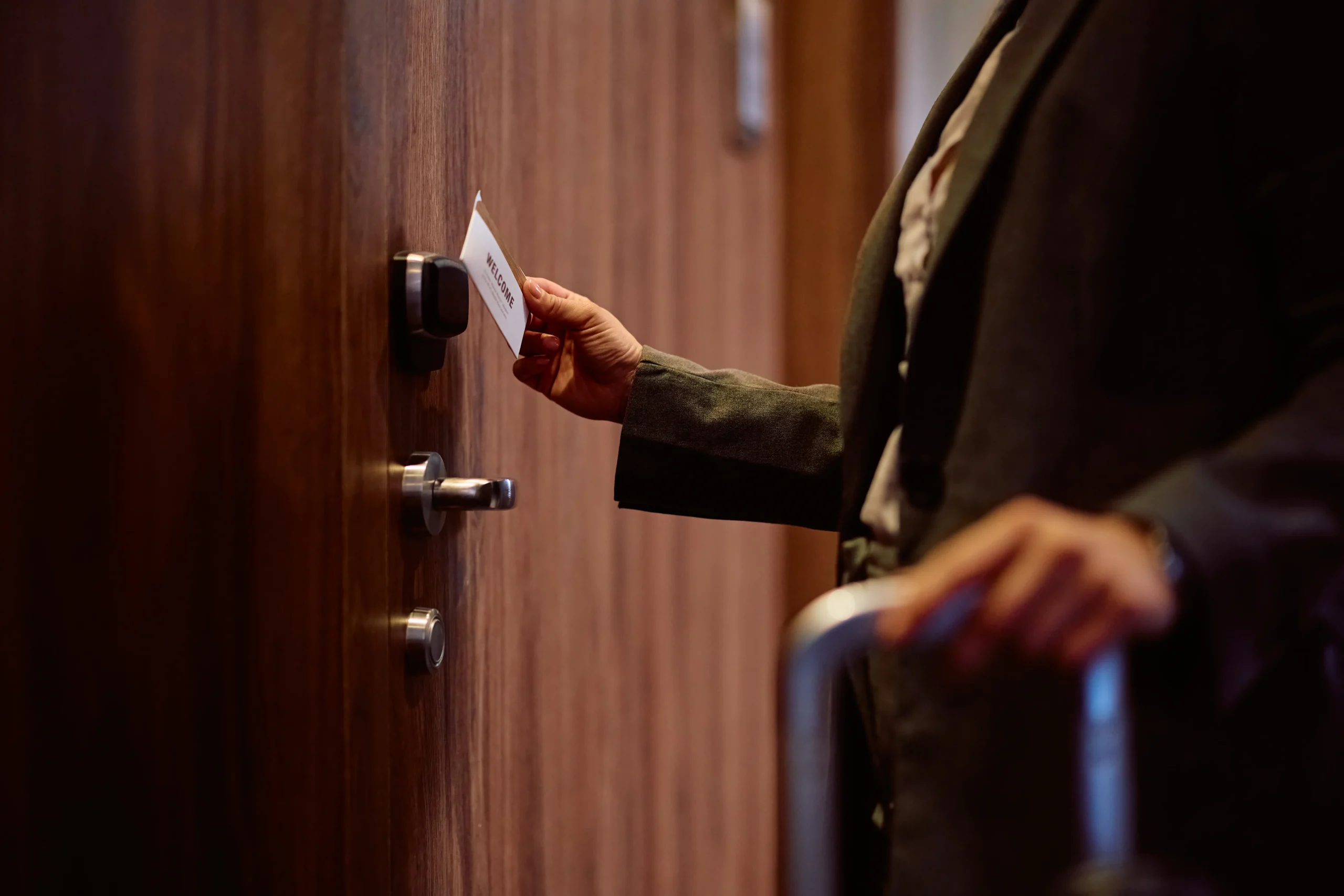
You’ll stop wondering if a former employee still has a key. No more rekeying locks every time someone leaves or loses their credentials.
With a proper access control system installation, you grant and revoke access from your phone or computer. You see who entered, when they entered, and which doors they used. If someone tries to access a restricted area, you know immediately.
Your insurance company will likely notice too. Many carriers reduce premiums when you install commercial access control systems because the data shows they work. Three out of four employees admit to workplace theft. Access control doesn’t eliminate trust, it removes opportunity.
For businesses in Holmes, PA where the median household income sits above $113,000, your building likely contains equipment, inventory, or data worth protecting. Access control isn’t paranoia. It’s documentation.
The McCausland family has been doing locksmith work since the late 1800s. Tom McCausland and his daughter Chrissy run the shop now, continuing what started over 140 years ago.
We’re not a van with a phone number. We’re a storefront at 1101 Lincoln Ave in Prospect Park with real inventory, real technicians, and a real commitment to Delaware County businesses. We’re the largest locksmith operation in the Delaware Valley, and we got that way by showing up and doing the work right.
Holmes has 102 business establishments employing around 1,324 people. Many of them need better control over building access than traditional keys provide. We’ve installed door access control systems across Delaware County for offices, warehouses, medical facilities, and multi-tenant buildings.

We start with a site visit. We look at your doors, your layout, your current hardware, and how people actually move through your building. We ask about your concerns and what you’re trying to solve.
Then we recommend a system. Could be card readers. Could be mobile access where your phone is your key. Could be biometric if you need higher security. Could be a cloud-based system that scales as you grow, or a traditional on-premise setup if that fits your operation better.
We handle the installation. That means mounting readers, running any necessary wiring, integrating with your existing locks or replacing them if needed, and connecting everything to your network. We test every access point.
Before we leave, we train your team. You’ll know how to add users, remove users, set access schedules, pull reports, and troubleshoot basic issues. We also provide a comprehensive warranty on labor and parts.
If something breaks or you get locked out, we typically respond within 30 to 60 minutes in Delaware County. After-hours emergencies included.
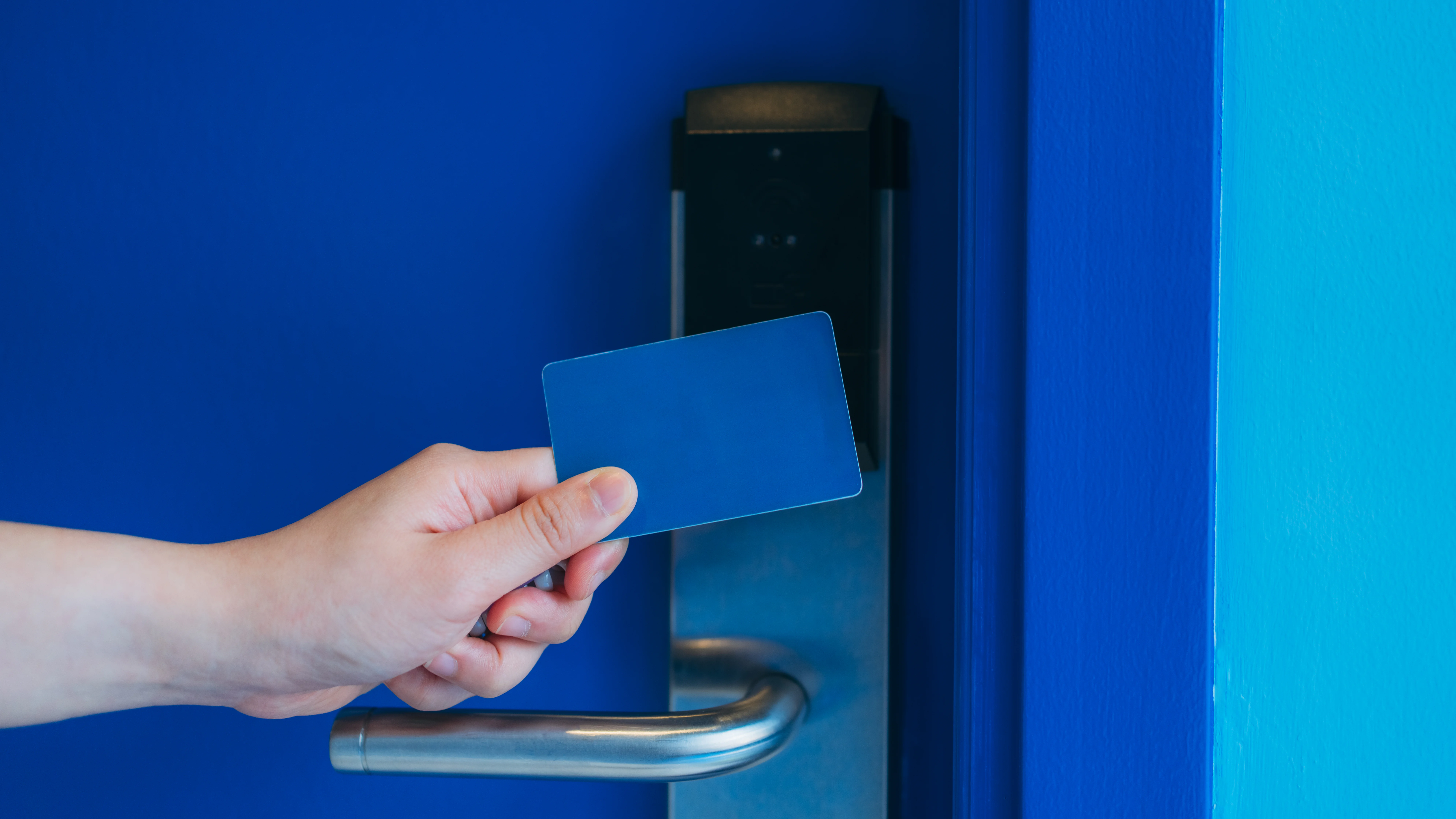
Ready to get started?
You get hardware that works with your doors. We don’t force you into a system that requires replacing perfectly good locksets. If your current hardware is compatible, we integrate with it.
You get a system you can manage yourself. Add a new employee at 6 a.m. from your phone. Revoke access for someone who just quit. Set temporary credentials for contractors. Lock or unlock doors remotely if you forgot to secure the building.
You get integration options. Most modern business access control systems connect with video surveillance, alarm systems, and even HR software. When someone badges in, the camera records it. When the alarm is set, certain doors lock automatically.
For Holmes businesses where 81.4% of workers are employed by private companies, access control solves the visitor problem too. Delivery drivers, clients, vendors—you can issue temporary credentials or require them to request entry. No more propping doors open or handing out keys you’ll never get back.
You also get records. If something goes missing or an incident occurs, you have data. Who was in the building? When did they enter? Which doors did they use? That documentation matters for investigations, insurance claims, and liability protection.

For a small business with two to four doors, you’re typically looking at $2,000 to $6,000 depending on the type of system and existing hardware. That includes readers, controllers, credentials, installation, and basic training.
Card reader systems tend to cost less upfront. Mobile access systems cost a bit more but eliminate the need to purchase and manage physical cards. Biometric systems are the most expensive but offer the highest security.
Cloud-based systems usually have lower installation costs but include monthly per-door or per-user fees. On-premise systems cost more upfront but have no recurring software fees. We walk through both options during the consultation so you can see the total cost of ownership over three to five years, not just the initial bill.
Usually, yes. Most commercial doors and locksets can accommodate access control hardware without full replacement.
We assess your current setup during the site visit. If you have standard commercial-grade locks and doors in decent condition, we can typically add electric strikes, magnetic locks, or electrified locksets that integrate with access control readers. If your doors are residential-grade or damaged, we might recommend upgrades for security and reliability reasons.
The goal is to work with what you have whenever possible. Replacing doors and frames gets expensive fast. If your existing hardware meets commercial security standards and functions properly, we integrate with it. If it doesn’t, we tell you why and show you what needs to change.
Most commercial access control systems include fail-safe or fail-secure options depending on your needs and local fire codes.
Fail-safe means the door unlocks when power is lost. This is required for certain exit doors to meet fire safety regulations. Fail-secure means the door stays locked when power is lost, which makes sense for perimeter doors or high-security areas.
Many systems also include battery backup that keeps the system running during short power outages. For longer outages, you can still use physical keys as a backup. We don’t remove your mechanical lock capability unless you specifically request it.
If the system malfunctions for any other reason, we respond fast. For businesses in Delaware County, we’re typically on-site within 30 to 60 minutes for emergencies. We also provide remote troubleshooting for issues that don’t require a physical visit.
You log into the system and add or remove their credentials in about 30 seconds. No need to call us for routine changes.
When you hire someone, you create a user profile, assign their access permissions (which doors, what times), and issue their credential. If you’re using cards, you program a new card. If you’re using mobile access, you send them an app invitation.
When someone leaves, you deactivate their credential immediately. Their card stops working. Their phone loses access. They can’t get in. This is the biggest advantage over traditional keys—you don’t have to wonder if they made copies or worry about collecting keys during an awkward termination conversation.
You can also set temporary access. Contractors working on a project for two weeks? Give them credentials that automatically expire. Cleaning crew that only needs access on Tuesday and Thursday evenings? Set a schedule. The system enforces it automatically.
Yes, and the integration makes both systems more useful.
When someone badges into your building, the access control system can trigger your cameras to start recording that specific door. If someone tries to use an invalid credential or forces a door open, the system can send an alert and capture video of the event.
You can also tie access control to your alarm system. When the alarm is armed, certain doors automatically lock. When the first authorized person badges in during the morning, the alarm disarms. When the last person leaves and badges out, the system arms the alarm and locks all doors.
We install and integrate both access control and CCTV systems, so we can set up the whole security ecosystem at once if that’s what you need. If you already have cameras or an alarm system, we work with most major brands to integrate new access control with your existing equipment.
For a small business with two to four doors, plan on one full day. Larger installations take longer depending on the number of doors, how much wiring is required, and whether we’re integrating with other systems.
The actual reader installation at each door takes a couple of hours. Running wire, mounting controllers, configuring the software, and testing everything adds time. If your building already has network infrastructure in place, that speeds things up. If we need to run new cable through walls or ceilings, it takes longer.
We do most installations during business hours, but we can work evenings or weekends if you can’t have us disrupting your operation during the day. We clean up completely and make sure everything works before we leave. You’re not waiting days for us to come back and finish the job.