
Hear from Our Customers
You get a system that tracks every entry in real time. No more wondering if someone propped open a back door or let in a former employee. You see it, you control it, and you can lock down access from your phone if something feels off.
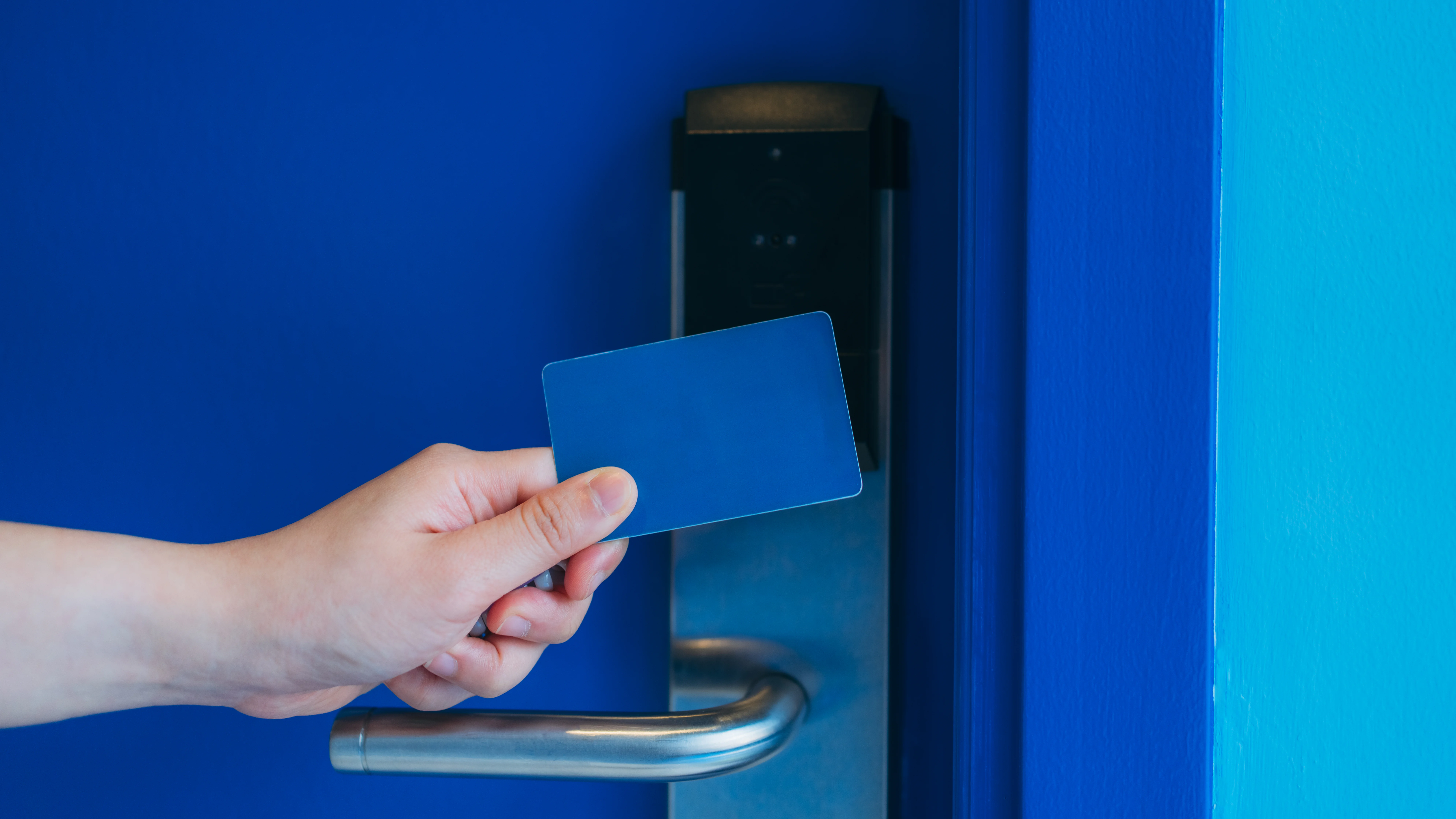
Most business access control systems give you mobile credentials instead of plastic cards that walk out the door in someone’s pocket. Employees use their phones. You deactivate access instantly when someone leaves. No rekeying, no wondering how many copies are floating around.
The difference shows up when you’re not there. A door gets forced open at 2 a.m., and you get an alert. Someone tries using a deactivated credential, and the system logs it. You’re not reacting to problems the next morning—you’re stopping them as they happen.
We’ve been handling commercial security in Delaware County since the late 1800s. We’re the largest locksmith operation in the Delaware Valley, and we’ve installed door access control systems in facilities throughout Middletown Township and the surrounding area.
Elwyn sits right in our service zone. We know the mix of healthcare facilities, social service organizations, and commercial properties here. Many require strict access protocols, and we’ve worked with enough of them to understand what actually works versus what sounds good in a sales pitch.
Tom McCausland runs the business now with his daughter Chrissy. We’re still family-owned, still local, and we’re at 1101 Lincoln Ave in Prospect Park if you want to talk through options in person instead of over email.
First, we come out and look at your doors, your layout, and how people actually move through your space. We’re figuring out where cameras should go, which doors need electronic locks, and whether your current infrastructure can handle the system you’re asking about. This isn’t a sales call—it’s a real assessment.
Then we spec out the system. You’ll see what hardware goes where, how it integrates with any existing security setup, and what it costs. We use manufacturer-approved parts from brands like Schlage, Medeco, and Kwikset because we’re authorized to service them, and because they last.
Installation happens on your timeline. We don’t rip out doors or leave you with half-finished work at the end of the day. You get a working system, training on how to use it, and access to our team if something goes wrong. We’re local, so if you need us back out, we’re there in 20 to 30 minutes.
Ready to get started?
You get electronic locks on the doors you choose, a control panel that manages permissions, and software that lets you add or remove users without calling us every time. Most systems we install include mobile access, so your team uses their phones instead of carrying another card.
We integrate with CCTV if you want video tied to entry events. That means when someone badges in, you can pull up footage of who it actually was. It’s useful when credentials get shared or when you need to verify who accessed a restricted area.
In Elwyn, we see a lot of requests from healthcare and social service facilities that need compliance with specific regulations. We handle that. We also work with smaller commercial properties that just want better control than a keyed lock. The system scales to what you need, and we don’t upsell you into features that don’t make sense for your operation.
You also get our OEM parts guarantee and access to our emergency service. If your system goes down or you get locked out, we respond fast. We’ve been doing this in Delaware County long enough that we stock the parts most systems need, and we don’t make you wait three days for a technician.

It depends on how many doors you’re controlling and what features you need. A basic setup for one or two doors with electronic locks and mobile credentials usually starts around a few thousand dollars. Add more doors, integrate video surveillance, or include biometric readers, and the price goes up.
We don’t give quotes over the phone because every building is different. Your doors might need new hardware. Your network might need upgrades to support the system. We need to see it.
The real cost isn’t just installation—it’s what happens after. Cheap systems fail, and you’re either locked out or stuck with doors that won’t secure. We use quality components and install them correctly so you’re not calling us back every month. That’s where the value is.
Yes, and it’s one of the most useful things you can do. When your door access control systems talk to your CCTV, you get video clips tied to every entry event. Someone badges in at an odd time, and you can pull up exactly who it was and what they did.
We work with most major camera systems. If you’ve already got cameras installed, we’ll check compatibility during the walkthrough. If they’re too old or use a format that doesn’t play well with modern access control, we’ll tell you that upfront.
Integration also helps with investigations. You don’t have to scrub through hours of footage to find out who accessed a room. The system logs the entry, and the video is right there. It saves time and gives you a complete picture of what’s happening in your building.
You deactivate their credential immediately from the system. It takes about 30 seconds. They can’t use that phone or card to get in anymore, and you don’t have to worry about someone else picking it up and walking into your building.
If they find the phone or get a new one, you reactivate their access or issue a new credential. It’s faster and cleaner than rekeying locks or tracking down physical keys. You’re in control the whole time.
This is why mobile credentials are better than key cards. People notice when their phone is missing. They don’t always notice when a card falls out of their pocket. With mobile access, you also get fewer lost credentials overall—about 40% fewer based on industry data—and that means fewer security gaps.
For most small to mid-sized businesses, installation takes one to three days depending on how many doors we’re outfitting and whether we need to run new wiring. If your building already has network infrastructure in place and the doors are prepped, it goes faster.
We don’t leave you with a half-working system at the end of the day. If we’re working on your main entrance, we make sure it’s secure before we leave. You’re never sitting there overnight with a door that doesn’t lock.
Larger facilities with dozens of doors or buildings that need extensive wiring take longer. We’ll give you a timeline during the assessment so you know what to expect. We also schedule around your business hours if you can’t afford downtime during the day.
Most systems have battery backup that keeps them running for several hours during an outage. Your doors stay locked, and authorized users can still get in. The system logs entries just like it normally would.
How long the backup lasts depends on the system and how much battery capacity it has. Basic setups might give you four to eight hours. Larger systems with more robust power supplies can go longer.
If you’re in a facility where power outages are common or where security can’t lapse for any reason, we can spec out a system with extended backup or integrate it with your building’s generator. We’ll talk through your specific needs during the assessment and make sure you’re covered.
You manage it. The software is designed so you can add employees, remove them, set access schedules, and pull reports without calling us. Most business owners or office managers figure it out in about 20 minutes.
We train you on the system after installation. You’ll know how to issue credentials, lock or unlock doors remotely, and check entry logs. If you get stuck or need to make a change you’re not comfortable with, you can call us.
The only time you need us back out is for hardware issues, system upgrades, or adding new doors to the network. Day-to-day user management is all you. That’s the point—you get control without needing a technician every time someone gets hired or leaves.