
Hear from Our Customers
You’re not looking for fancy tech demos. You need a door access control system that stops unauthorized entry, tracks who came through when, and doesn’t fail during an emergency.
Here’s what changes after installation: No more wondering if someone made copies of keys. No more scrambling to rekey locks when an employee leaves. No more propping doors open because card readers are slow or inconvenient.
Your building becomes accountable. Every entry gets logged. Lost credentials get deactivated in seconds, not hours. And when something goes wrong at 2 AM, you’ll know exactly what happened and who was there.
Most Concordville businesses see the return within 18 months. Medium-sized operations save around $25,000 annually just in reclaimed time and prevented security incidents. That’s not counting what you avoid when the wrong person can’t get in.
We’ve been solving security problems in Delaware County since the late 1800s. Tom McCausland and his daughter Chrissy run the largest locksmith operation in the Delaware Valley from our Prospect Park storefront.
We’ve seen every lock problem that exists. That experience matters when you’re installing building access control systems that need to work with your existing doors, frames, and fire codes.
Concordville sits in one of the fastest-growing commercial corridors in Delaware County. With major employers like Boeing and eleven colleges nearby, your security can’t be an afterthought. We install systems that match the pace of business here—fast response, reliable hardware, and support that picks up the phone.

We start with a free walk-through of your property. You show us every door that matters, and we assess what hardware you already have, what needs upgrading, and where your vulnerabilities are.
Then we map out the system. That includes deciding between card readers, mobile credentials, biometric scanners, or a combination. We’ll tell you what works for your traffic patterns and budget—not what’s trendy.
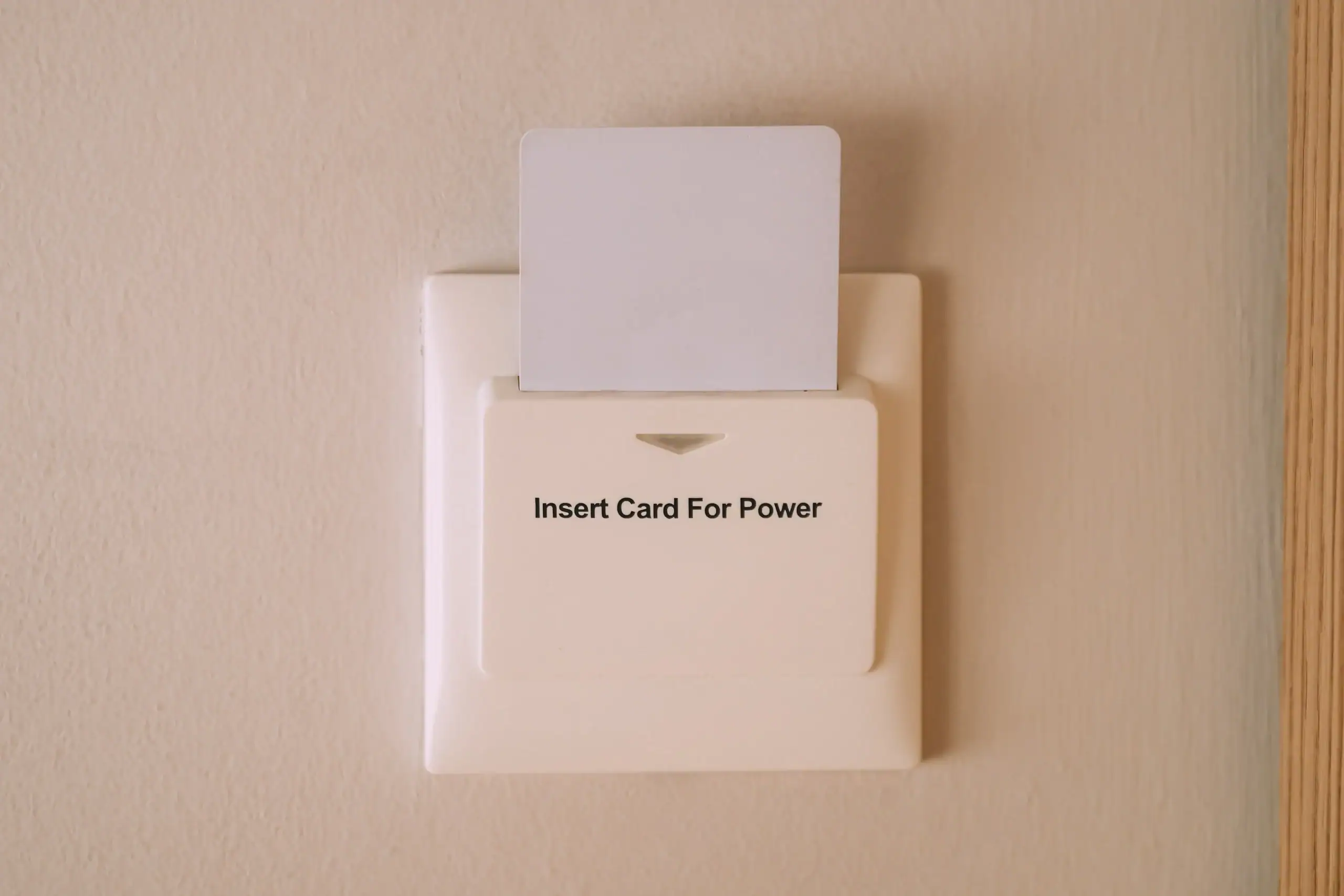
Installation happens on your schedule. We coordinate around your business hours so you’re not locked out or dealing with half-finished doors during peak times. Our techs install controllers, readers, electric strikes or magnetic locks, and integrate everything with your network or cloud platform.
After installation, we program user credentials, set access schedules, and train your team on managing the system. You’ll know how to add users, pull reports, and lock someone out if needed. We don’t leave until you’re comfortable running it yourself.
Ready to get started?
Your access control system installation includes the hardware—card readers, control panels, electric locks, and credentials. We use manufacturer-approved components from Kwikset, Medeco, and Schlage because they last longer and don’t require constant replacement.
You also get integration with your existing infrastructure. If you have panic bars, fire alarms, or CCTV, we make sure everything communicates properly. Delaware County has strict fire code requirements, and we install systems that comply without creating safety risks.
Concordville businesses often need gate access control systems for parking areas or perimeter security. We handle those too, with the same attention to durability and weather resistance that matters in Pennsylvania winters.
The system comes with cloud-based or local management software. You decide who sees what data. You control access schedules remotely. And if you’re managing multiple locations across Delaware County, you can monitor everything from one dashboard.
Support doesn’t end after installation. When you call with a problem, you’re talking to the same people who installed your system. We respond to business emergencies in 20-30 minutes throughout most of Delaware County.
Most installations finish in one to three days depending on how many doors you’re securing and what infrastructure already exists. A small office with three or four entry points usually wraps up in a day. Larger facilities with 15+ doors, multiple buildings, or complex integrations take longer.
The timeline depends on whether we’re working with existing door hardware or replacing it entirely. If your doors already have electric strikes or compatible frames, installation moves faster. If we’re retrofitting old doors or adding magnetic locks, expect additional time for proper mounting and wiring.
We schedule around your operations. If you can’t shut down during business hours, we’ll work evenings or weekends to avoid disrupting your workflow. The goal is functional security without forcing you to close.
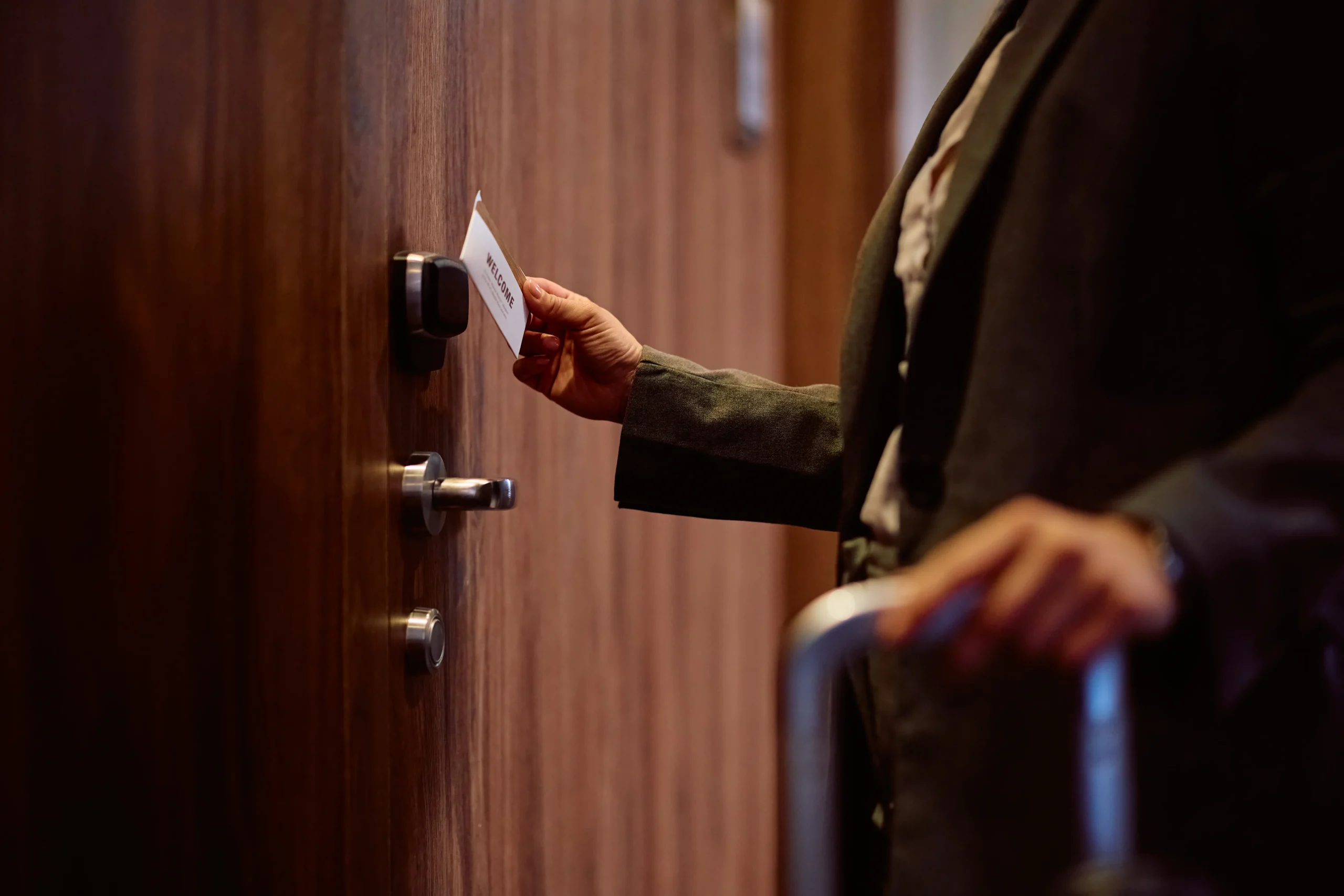
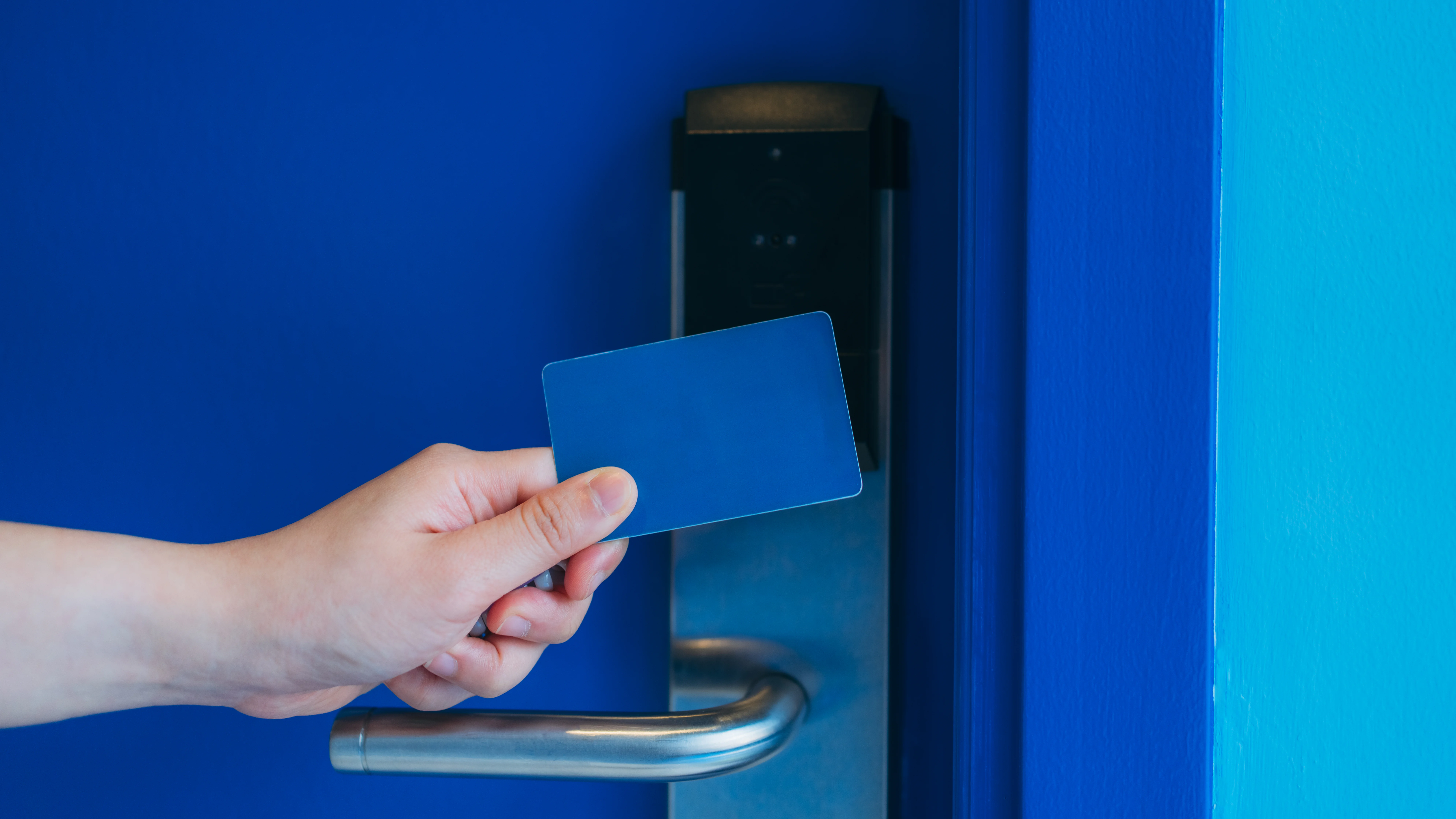

Card readers require physical keycards or fobs that employees tap or swipe to gain entry. They’re reliable, inexpensive, and easy to replace if lost. The downside is people lose them—about 20% of cards go missing annually, and each replacement costs time and money.
Mobile credential systems use smartphones as the access device. Employees unlock doors through an app or Bluetooth signal. You’re not issuing physical cards, so there’s nothing to lose or replace. Credentials get revoked instantly when someone leaves, and you’re not waiting for them to return a card.
The tradeoff is cost and compatibility. Mobile systems require newer hardware and often subscription-based software. If your team doesn’t carry smartphones, or you have high turnover with hourly workers, cards might make more sense. We’ll recommend what fits your situation, not what’s most profitable for us.
Yes, and you should. Integration means your access control system and CCTV talk to each other. When someone badges in, the camera captures who it was. If a door gets forced open, the system triggers recording and sends an alert.
Most modern access control platforms integrate with major camera brands through IP networks. We connect the two systems so you’re viewing everything from one interface. That’s useful during investigations—you can pull up exactly who entered and what the camera saw at that timestamp.
If you’re running older analog cameras, integration gets trickier but isn’t impossible. We’ll assess your current setup during the walk-through and tell you what’s feasible. Sometimes upgrading one camera at a key entry point makes more sense than replacing the entire system.
Access control systems have battery backup that keeps locks functional during power outages. Most controllers hold a charge for 4-8 hours, enough to get through typical outages without locking everyone out or leaving doors unsecured.
If you lose internet, local systems keep working because they don’t rely on cloud connectivity to grant access. Cloud-based systems store credentials locally on the controller, so even without internet, your employees can still badge in. You just won’t have remote management or real-time alerts until connectivity returns.
For critical facilities, we recommend uninterruptible power supplies (UPS) that extend backup time and protect equipment from surges. Fire-rated doors with magnetic locks have specific fail-safe requirements—they unlock during fire alarms to allow egress. We install everything to code so you’re covered during emergencies.
You log into the management software and deactivate their credential immediately. It takes about 30 seconds. Their card or mobile access stops working across all doors, and they can’t get back in.
If someone changes roles—say from general staff to management—you adjust their permission level instead of issuing new credentials. The system lets you assign different access rights to different doors or time windows. A manager might have 24/7 access while hourly employees only get in during business hours.
The software keeps an audit trail of who made changes and when. That matters for compliance and liability. If there’s ever a question about who had access during a specific period, you can pull the report and see exactly what permissions were active.
Yes, but it’s minimal compared to the security you gain. Most systems need a checkup once or twice a year—testing readers, inspecting door hardware, updating firmware, and replacing batteries in wireless components.
You’ll also want to audit user credentials periodically. Employees leave, roles change, and access permissions pile up. A quarterly review keeps your system clean and reduces security gaps from outdated credentials still floating around.
Monitoring depends on your risk tolerance. Some businesses want 24/7 alerts for forced doors or after-hours access. Others check logs weekly. We set up alerts based on what matters to you, not what generates the most notifications. If you’d rather handle monitoring in-house, we train your team. If you want us on call, we offer that too.