
Hear from Our Customers
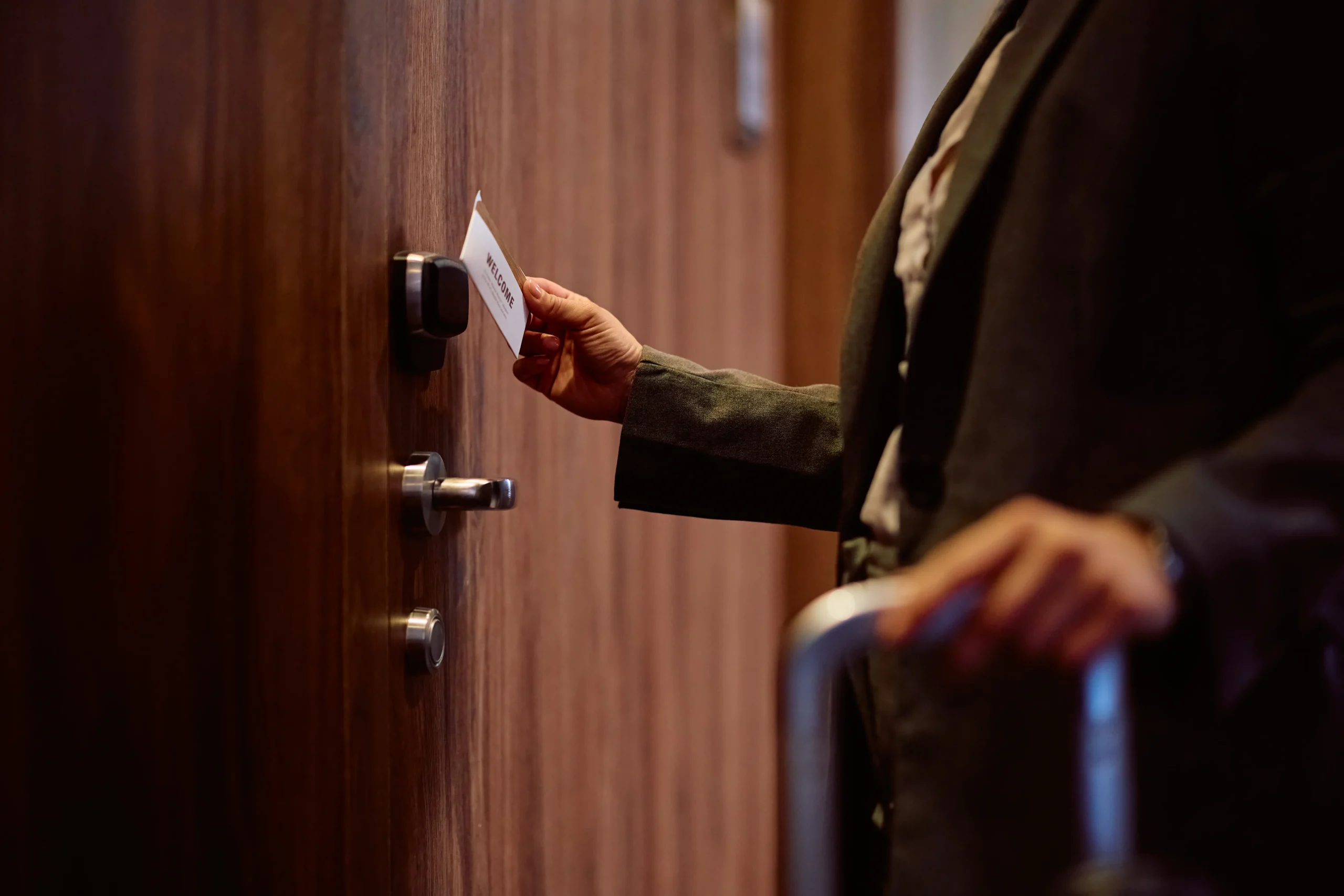
You’re not just locking doors. You’re managing who has access to sensitive areas, tracking entry during off-hours, and eliminating the chaos that comes with lost keys or former employees who never returned theirs.
A proper access control system installation gives you real-time control over every entry point. You can grant temporary access to contractors without handing over physical keys. You can lock down certain areas to specific staff members. And if someone leaves your company, you revoke their credentials instantly instead of wondering if they made copies.
The difference shows up when you’re not scrambling to rekey locks after turnover. When you’re not worrying about who propped open the back door. When you can pull up a log and see exactly who entered the building at 9 PM last Tuesday. That’s what a building access control system actually does for you.
We’ve been installing commercial access control systems in Chester Heights and throughout Delaware County since before most security companies existed. We opened our Prospect Park shop in 1981, but the McCausland family has been doing locksmith work since the late 1800s.
Tom and his daughter Chrissy run the operation now. That’s four generations of learning what actually works and what breaks down after six months. We’re not a franchise or a national chain that showed up last year. We’re the people local businesses call when they need door access control systems installed correctly the first time.
Delaware County sees a crime every 40 minutes on average. Organized burglary rings have been hitting commercial properties throughout Chester, Montgomery, and Delaware counties. You need security that actually stops unauthorized access, not just the appearance of it.

We start by walking your property with you. Not to sell you the most expensive system, but to understand which doors need electronic access control, which areas require restricted entry, and how your staff actually moves through the building during a normal day.
Once we know what you’re protecting and who needs access where, we design a system that fits. That might be keypad entry for some doors, card readers for others, or mobile credentials if your team already lives on their phones. We’re not locked into one manufacturer or one type of technology. We install what makes sense for your building and your budget.
Installation happens on your timeline. We mount the hardware, run the wiring, connect everything to your network or cloud platform, and program the system based on your access rules. Then we test every entry point, train your key people on managing credentials, and make sure you can add or remove users without calling us every time.
You’ll have a system that logs every entry, lets you control access remotely, and integrates with your existing cameras or alarm system if you want it to. And if something stops working, you’re calling a local shop that can get someone to Chester Heights the same day.
Ready to get started?
A complete access control system installation covers more than just the hardware on your doors. You’re getting a full assessment of your entry points, professional-grade electronic locks or card readers, a control panel or cloud-based management platform, and all the wiring and network integration required to make it work.
We handle door entry systems for office buildings, warehouses, medical facilities, and retail locations throughout Delaware County. Each setup is different. A medical office in Chester Heights needs HIPAA-compliant access logs and restricted entry to patient records. A warehouse needs gate access control systems that handle high traffic volume without slowing down operations. We configure systems based on what you’re actually protecting.
Small businesses in Delaware County create 80% of local jobs. When crime goes up, those businesses suffer. A solid business access control system reduces your risk of break-ins, gives you documentation if something does happen, and keeps your insurance costs from climbing. Around 19,231 burglaries happen in Pennsylvania every year. Most of them target properties with weak or outdated entry security.
You’ll also get ongoing support after installation. Access control technology changes. Staff turnover happens. Buildings get renovated. We’re here in Prospect Park when you need to expand the system, troubleshoot an issue, or upgrade to newer hardware down the line.

Cost depends on how many doors you’re securing, what type of credentials you want to use, and whether you’re going with a cloud-based or on-premise system. A basic setup for a small office with two or three entry points might run a few thousand dollars. A larger facility with multiple buildings, integration with existing security cameras, and advanced features like biometric readers will cost more.
Cloud-based systems typically have lower upfront costs because you’re not buying expensive on-site servers. You’ll pay a monthly or annual subscription instead. On-premise systems cost more to install but don’t have recurring software fees. Both work well. It depends on whether you want to own the infrastructure or prefer the flexibility of cloud management.
We give you a real quote after seeing your building. Too many variables exist to throw out a number that means anything. But we’ll walk you through options at different price points so you can make a decision based on what actually matters for your security and your budget.
Yes, and you should. When your door access control systems and surveillance cameras talk to each other, you get a complete picture of who entered, when they entered, and what they did once inside. That’s useful for investigating incidents, verifying employee hours, or just understanding traffic patterns in your building.
Most modern access control platforms integrate with major camera systems through standard protocols. When someone badges in at a door, the system can trigger the nearest camera to start recording. If an unauthorized access attempt happens, you’ll get an alert with video footage attached. It’s not complicated to set up if you’re working with compatible equipment.
We install and service both access control and CCTV systems, so we handle the integration during your initial setup. If you already have cameras installed, we’ll check compatibility before recommending an access control system. The goal is to make everything work together without forcing you to replace equipment that’s still doing its job.
Good systems have battery backup that keeps locks functioning during a power outage. Depending on how you configure it, doors can either fail secure (stay locked) or fail safe (unlock automatically). Most commercial buildings fail secure on perimeter doors to prevent unauthorized entry and fail safe on interior doors to allow emergency exit.
If you’re using a cloud-based access control system and your internet goes down, the local controllers at each door keep working. They store credentials and access rules locally, so people can still badge in and out. You just won’t be able to make changes to permissions or view real-time logs until connectivity comes back. Once it does, everything syncs automatically.
Battery backup typically lasts several hours, sometimes longer depending on the system size and how much traffic your doors see. We install systems with enough backup capacity to get you through typical outages without losing security. If you’re in an area with frequent power issues, we can spec larger battery systems or integrate with your building’s generator.
You create temporary credentials that expire automatically. Most access control systems let you issue a card, PIN code, or mobile credential that only works during specific dates and times. A contractor working on your building for two weeks gets access from 7 AM to 6 PM Monday through Friday, then the credential stops working when the job’s done.
This beats handing out physical keys you’ll never get back. It also gives you a record of when temporary workers actually showed up and which doors they used. If tools go missing or something gets damaged, you have data to work with instead of guessing who was on site.
Managing this stuff is simple once the system’s set up. You log into the platform, create a new user, assign their access level and schedule, and either hand them a card or send a mobile credential to their phone. When they’re done, you deactivate the credential. Takes about two minutes. No rekeying, no wondering if copies were made, no security gaps.
Cloud-based access control systems handle multiple locations easily. You manage everything from one dashboard regardless of whether you have two buildings in Chester Heights or twenty spread across Pennsylvania. Same platform, same interface, same credential database.
This matters when you have employees who work at multiple sites. You issue one credential that grants appropriate access at each location based on their role. If someone transfers from your Prospect Park office to your Philadelphia location, you update their permissions in the system instead of collecting old keys and issuing new ones.
You also get consolidated reporting across all locations. You can see access patterns, security events, and system health for your entire operation without logging into separate systems or calling different vendors. If you’re managing security for a growing business, this kind of centralized control saves time and reduces the chance of something slipping through the cracks.
A straightforward installation on a small building with three to five doors usually takes one to two days. Larger facilities with dozens of entry points, complex wiring requirements, or integration with existing security systems can take a week or more. The timeline depends on your building’s layout, how much infrastructure already exists, and whether we’re working around your business hours.
We’re not tearing apart your operation to install this. Most of the work happens at the doors themselves and wherever we’re mounting the control panel or server. If you need us to work nights or weekends to avoid disrupting your business, we can do that. If you want to phase the installation across multiple weeks so you’re not dealing with construction chaos all at once, that works too.
You’ll know the timeline before we start. We walk the property, assess what’s involved, and give you a realistic schedule. Then we show up when we say we will and finish the job without dragging it out. You’ve got a business to run. We’re here to improve your security, not become a permanent fixture in your hallway.