
Hear from Our Customers
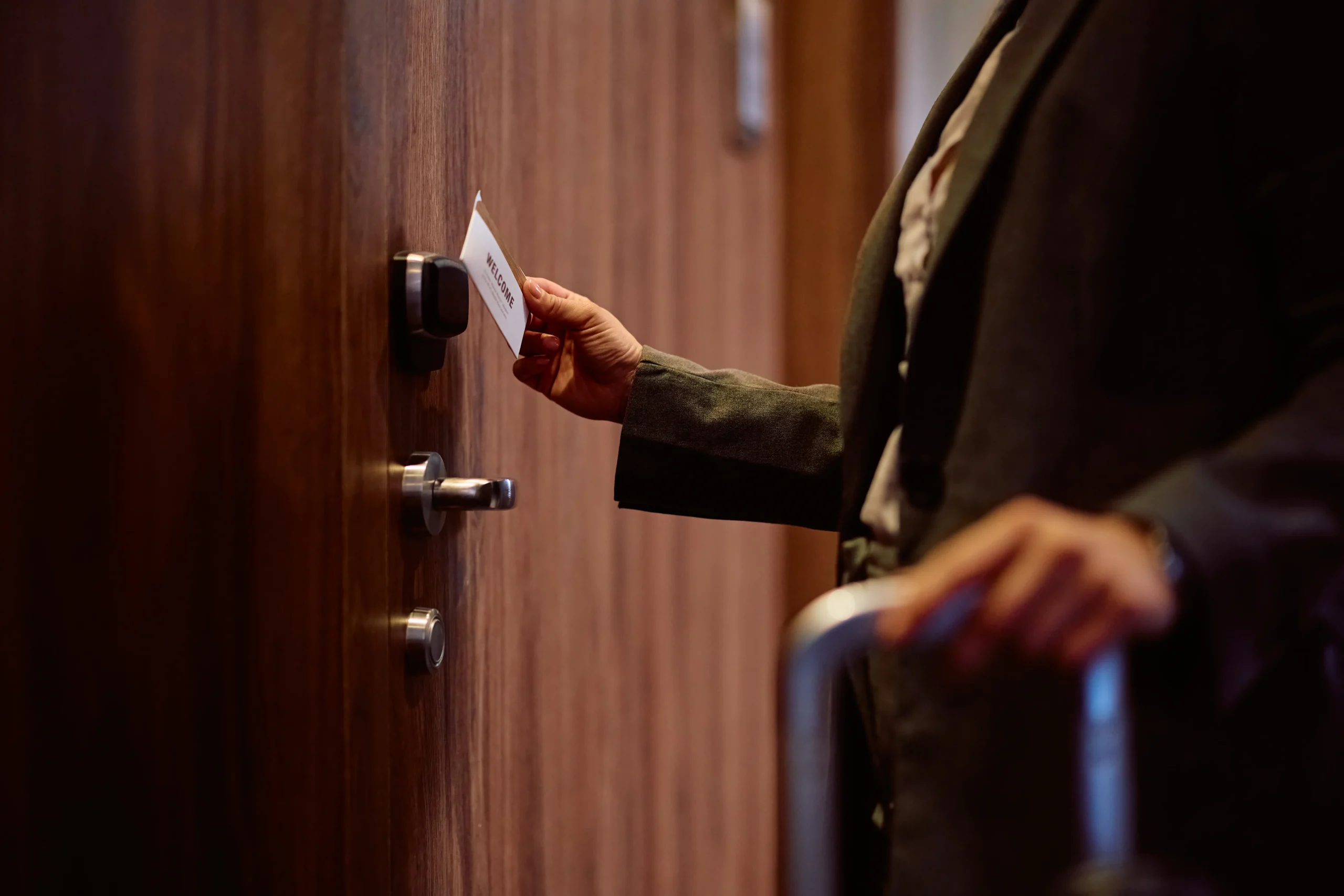
You’re not just locking doors anymore. You’re managing access for employees, contractors, vendors, and cleaning crews across multiple entry points. Keys get copied, lost, or never returned when someone leaves. You’re left wondering who still has access and whether your property is actually secure.
A proper access control system installation changes that. You grant access with a card, fob, or biometric scan. You revoke it instantly when someone’s terminated or a contract ends. You get timestamped logs of every entry and exit. No more rekeying locks when an employee quits or a key goes missing.
The businesses around Wallingford dealing with organized theft rings and rising property crime aren’t relying on traditional locks anymore. They’re using door access control systems that create accountability, eliminate key management headaches, and give them real-time visibility into their buildings. That’s not overkill. That’s basic operational security in 2025.
We’ve been protecting properties in the Delaware Valley since the late 1800s. We’re not a van with a phone number. We’re the largest locksmith company in the region with a physical storefront, real inventory, and five generations of experience handling everything from basic lock repairs to complex building access control systems.
We’ve watched this industry evolve from mechanical locks to cloud-based access control. We’ve installed systems for healthcare facilities, retail stores, office complexes, and industrial properties across Delaware County. The businesses that have trusted us for years know we don’t oversell, we don’t disappear after installation, and we answer the phone when something goes wrong.
Wallingford businesses face the same security challenges as the rest of the Philadelphia area: rising theft, employee accountability issues, and the need to manage access across multiple locations. We’ve been solving those problems longer than most companies in this space have existed.

We start with a site assessment. That means walking your property, identifying every access point that needs control, and understanding how people actually move through your building. We’re looking at entry doors, interior doors, gates, loading docks, and any other area where you need to restrict or monitor access.
Next, we recommend a system based on your actual needs, not what’s most expensive. Some businesses need basic card readers at a few doors. Others need biometric scanners, mobile credentials, and integration with existing video surveillance. We’ll tell you what makes sense for your operation and your budget.
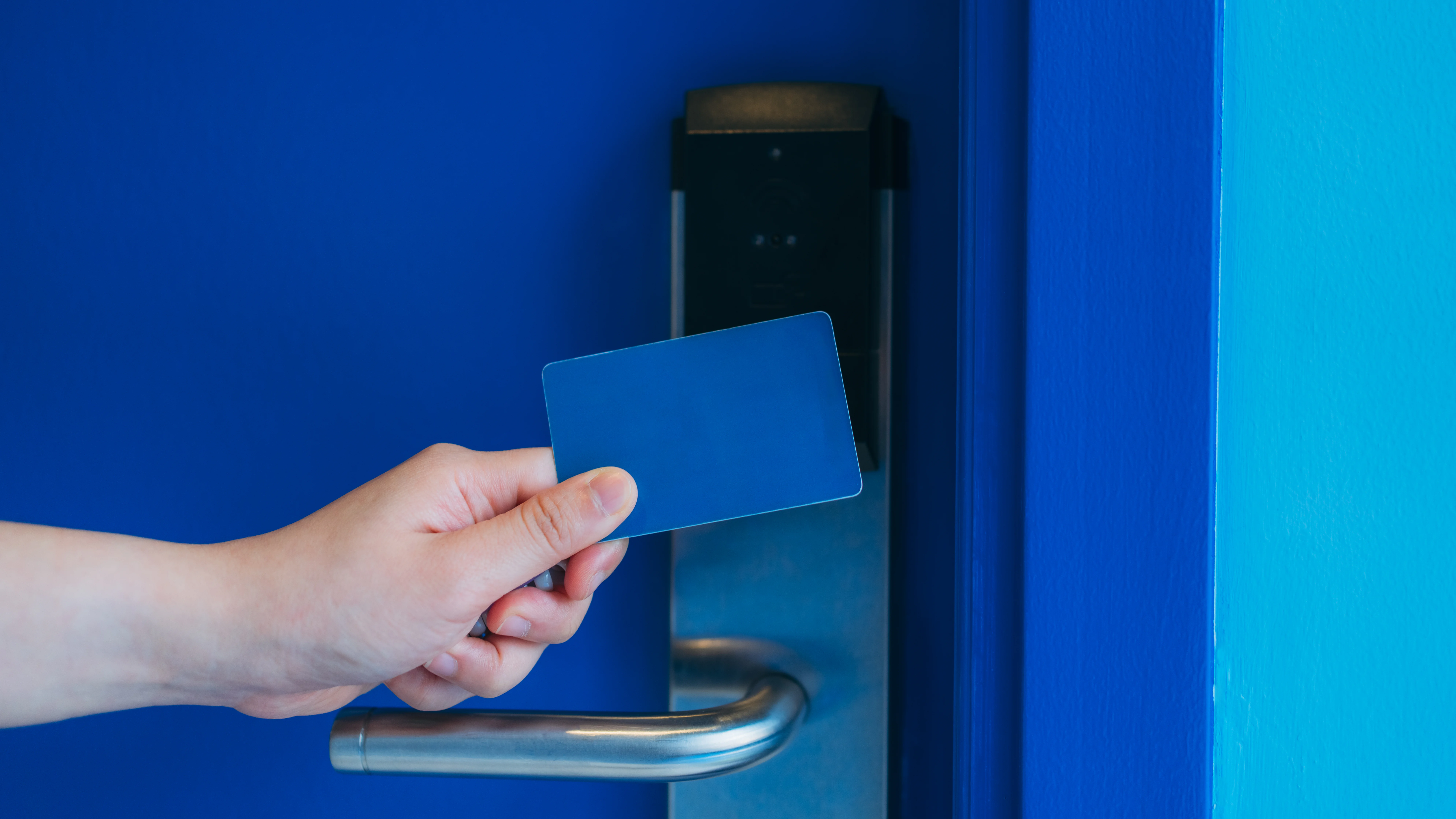
Installation happens on your timeline. Our technicians mount readers, run wiring, install electronic strikes or magnetic locks, and integrate everything with your access control panel or cloud-based platform. We test every entry point, program user credentials, and train your team on how to add users, run reports, and manage the system day-to-day.
After installation, you’re not on your own. We provide ongoing support, handle system updates, and respond to service calls when you need us. If a reader fails or you need to add doors later, we’re already familiar with your setup. No learning curve. No waiting on a national company’s call center.
Ready to get started?
You get hardware that works. We install readers, controllers, electronic locks, and credentials from manufacturers like Kwikset, Schlage, and Medeco. These aren’t consumer-grade products. They’re built for commercial use and designed to handle thousands of access events without failing.
You get a system configured for your workflow. That means setting up access schedules so employees can only enter during business hours, creating different permission levels for managers versus general staff, and integrating with your existing alarm system so everything works together. If you manage multiple locations, we can set up cloud-based access control that lets you control every site from one dashboard.
You get real data. Every time someone uses a credential, the system logs it. You can pull reports showing who accessed which door and when. That’s useful for investigating incidents, verifying employee hours, and maintaining compliance if you’re in healthcare or another regulated industry.
Wallingford businesses are dealing with the same theft trends hitting the rest of Delaware County. Organized retail crime is up 30% since 2021. Employee theft accounts for a third of corporate bankruptcies. A door access control system won’t solve every problem, but it creates accountability and eliminates the biggest vulnerability: untracked physical access.

It depends on how many doors you’re securing and what level of technology you need. A basic system for a small office with two or three access points might run a few thousand dollars. A larger facility with multiple buildings, biometric readers, and cloud-based management could be significantly more.
The cost breaks down into hardware, installation labor, and software or licensing fees if you’re using a cloud platform. Card readers and electronic locks are the bulk of the hardware expense. Installation costs vary based on whether we’re retrofitting existing doors or working with new construction where wiring is easier.
We don’t give ballpark quotes over the phone because every building is different. What we can do is come out, assess your property, and give you a detailed proposal that breaks down exactly what you’re paying for. No surprises. No upselling once we’re on site.
Yes, and you should. Integrating door entry systems with video surveillance gives you visual confirmation of who’s using each credential. If someone badges in at 3 a.m., you’ll have video footage showing whether it’s actually them or someone using a stolen card.
Most modern access control systems can integrate with IP-based camera systems through software platforms that unify everything into one interface. When an access event occurs, the system can trigger the camera to record or pull up live footage automatically. That’s useful for investigating incidents and verifying that access logs match actual behavior.
We work with your existing security infrastructure whenever possible. If you’ve already invested in cameras or an alarm system, we’ll make sure the access control system talks to those devices instead of forcing you to replace everything. Integration saves you money and makes your entire security setup more effective.
Most commercial access control systems have battery backup that keeps them running during power outages. The controllers and readers stay operational for several hours, sometimes longer depending on the battery capacity. Your doors stay secure and the system continues logging access events.
If a component fails, you have options. Some systems default to locked mode, meaning doors stay secured until the issue is resolved. Others can be configured to fail unlocked for life safety reasons, especially on emergency exits. We’ll configure your system based on your security needs and local fire codes.
We also provide emergency service if something breaks. Our technicians carry common replacement parts and can respond quickly when you have a system failure. If a reader stops working or a door won’t unlock, you’re not waiting days for a service call. We understand that access control isn’t optional. When it’s down, your business is disrupted.
You deactivate their credential immediately through the access control software. It takes about 30 seconds. Their card or fob stops working across all doors instantly. No need to collect keys, rekey locks, or worry about whether they made copies.
This is one of the biggest advantages over traditional key-based security. When an employee leaves, you’re not wondering if they still have building access. You’re not paying a locksmith to rekey every door they had a key to. You just disable their credential and move on.
You can also set up automatic deactivation schedules. If you hire temporary workers or contractors for a specific project, you can program their credentials to expire on a certain date. When the job’s done, their access ends automatically. No follow-up needed. That level of control is impossible with physical keys.
It depends on the type of system you install. Cloud-based access control requires internet connectivity because the software and data live on remote servers. You manage everything through a web browser or mobile app. If your internet goes down, most cloud systems have local caching that keeps doors functioning based on the last downloaded permissions.
Traditional on-premise systems don’t need internet. The controller and software run locally on your network or on a dedicated computer. You manage everything from that local interface. These systems keep working regardless of your internet status, but you lose the ability to manage access remotely or across multiple locations.
For most Wallingford businesses, cloud-based systems make sense. You get remote management, automatic software updates, and the ability to control multiple sites from anywhere. But if you’re in a location with unreliable internet or you have specific security requirements that demand local control, we can install an on-premise system that doesn’t depend on connectivity.
Yes. Mobile credentials are becoming standard in new access control systems installations. Employees download an app, receive a digital credential, and use their phone to unlock doors via Bluetooth or NFC. It works like the card system, but there’s nothing physical to lose or forget.
Mobile credentials are convenient and they’re more secure than cards. Phones are harder to share or duplicate. If an employee loses their phone, you can deactivate the credential remotely before anyone tries to use it. You can also set up notifications so you know immediately when a mobile credential is used.
The technology is mature and reliable now. About 30% of new commercial access control systems use mobile credentials as the primary or secondary authentication method. If your team already carries phones for work, it’s worth considering. One less thing to carry, one less credential to manage, and better security overall.